THE DECLINE OF THE LIBERAL INTERNATIONAL ORDER AND THE EMERGENCE OF MIDDLE POWERS

Working paper — Final edition
March 2026
ISSN 2938-0758
Daniel Martín Menjón
This document adopts a mixed analytical approach that combines three complementary methodological strategies, which are explained in detail in order to ensure transparency in the research protocols.
First, the study uses political discourse analysis as a tool to examine the rhetorical and conceptual ruptures that signal transformations in the international order. Mark Carney's speech in Davos (20 January 2026) constitutes the analytical entry point, not because it is attributed autonomous causality over the processes it describes, but because it articulates in an exceptionally lucid manner an epistemic rupture — the abandonment of the narrative of a rules-based order by a G7 leader — crystallises trends documented in academic literature for at least a decade. The discourse analysis protocol follows Fairclough's (2003) guidelines on critical discourse analysis, simultaneously addressing the text (lexical choices, metaphors, intertextuality), discursive practice (conditions of discourse production and reception) and social practice (the power relations that discourse reproduces or transforms).
Secondly, the document is based on a systematic review of interdisciplinary academic literature covering sources in Spanish, English, French, German and other languages. The bibliographic selection criteria prioritise works published by leading university presses and in peer-reviewed indexed journals, without excluding institutional grey literature (reports from international organisations, think tanks and research centres) when it is essential for documenting ongoing processes that academic literature has not yet fully absorbed. An effort has been made to ensure that the bibliography reflects the epistemological plurality that the argument itself claims, including contributions from the Anglo-Saxon school of international relations, the Francophone tradition of Bertrand Badie, the German Ordnungspolitik of Herfried Münkler, the Latin American relational autonomy of Russell and Tokatlian, the Chinese relational theory of Qin Yaqing, and the voices of feminism and decoloniality represented by Tickner, Enloe, Mignolo, and Quijano, among others. References follow the standards of the seventh edition of the American Psychological Association (APA 7th ed.).
Third, the paper uses comparative case study as its main analytical strategy. Canada serves as the primary case study—a G7 country that, faced simultaneously with hostility from its main trading partner and the fragmentation of multilateralism, has opted for a combination of values-based realism, strategic diversification, and middle-power diplomacy — complemented by secondary reference cases including the European Union (as a sui generis actor of normative and regulatory power), Australia (as an allied middle power facing similar strategic coverage dilemmas), and specific references to Indonesia, South Korea, Turkey, and Latin American middle powers. The selection of the Canadian case responds to criteria of analytical relevance, not to a claim of statistical representativeness: the objective is theoretical generalisation (Yin, 2018), not causal inference.
Recognised limitations. This study operates within constraints that must be made explicit. First, temporal bias: the analysis focuses on the period 2024-2026, too short a time frame to assess the consolidation or failure of the middle power strategies under examination. Second, source bias: despite efforts to incorporate non-Western perspectives, the bibliography inevitably reflects the predominance of English-language academic output, an imbalance that the discipline of international relations has not yet satisfactorily corrected. Third, the tension between diagnosis and prescription: the document moves between descriptive-explanatory analysis and the formulation of normative proposals, a duality that requires epistemological caution so as not to confuse what is with what should be. Fourth, the observation that an analytical framework focused on states and elites runs the risk of reproducing the logic it claims to criticise: this document analyses the end of an order constructed by Western elites using predominantly the conceptual instruments of those same elites, a contradiction that is mitigated—but not eliminated—by the incorporation of critical feminist, decolonial and Global South perspectives in chapters 11 to 13. Fifth, the question: is the proposal for a new order articulated by middle powers another 'convenient fiction' produced by academics and global studies institutes, or a viable strategy with identifiable conditions, resources and obstacles? The conclusions of chapter 15 attempt to answer this question with the greatest possible analytical honesty.
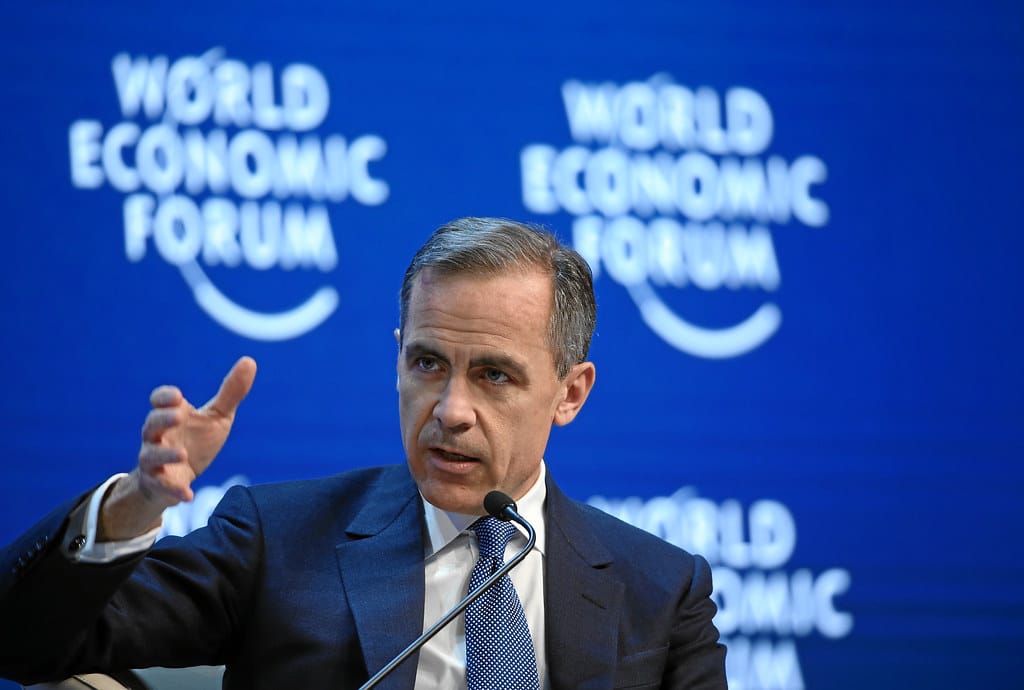
On 20 January 2026, Canadian Prime Minister Mark Carney took the stage at the World Economic Forum in Davos to deliver a speech that, in less than forty minutes, altered the terms of the debate on the future of the international order. Under the title 'Principled and Pragmatic: Canada's Path', Carney described the multilateral architecture built after the Second World War as "a pleasant fiction" whose usefulness had expired in the face of evidence that the great powers exempted themselves from their obligations "when convenient" and that trade rules were applied asymmetrically (Prime Minister of Canada, 2026). The formulation was not merely rhetorical: the adjective "pleasant" connotes collective complicity in maintaining an illusion that benefited those who participated in it, which distinguishes this statement from a mere diagnosis of institutional failure.
This paper examines the theoretical and practical implications of this discursive rupture. Its central argument is that the collapse of the liberal international order—a process that Cooley and Nexon (2025) consider already complete—does not necessarily lead to chaos, but rather opens up a space for agency for middle powers, understood not as a residual category in the power hierarchy but as actors capable of articulating coalitions, preserving global public goods, and proposing alternative institutional architectures. Canada, under Carney's leadership, offers a particularly revealing case study: a G7 country that, faced simultaneously with hostility from its main trading partner and the fragmentation of multilateralism, has opted for a combination of values-based realism, strategic diversification and middle-power diplomacy that defies the predictions of both classical neorealism and orthodox institutional liberalism.
The analysis is divided into seven parts. The first establishes the theoretical framework through a genealogy of the concept of the liberal international order, a detailed reading of the Davos speech and an examination of geoeconomics as a new field of confrontation between states. The second part addresses the theory of middle powers and its application to the Canadian case. The third part analyses the European Union as a strategic actor, with particular attention to the Draghi and Letta reports, the acceleration of European defence, and models of democratic integration. The fourth part examines three vectors of systemic transformation that any analysis of the international order must address: the technological revolution and surveillance capitalism, the climate crisis as a structuring geopolitical vector, and populism as endogenous democratic erosion. The fifth part integrates the human security paradigm with feminist, postcolonial and Global South perspectives that are indispensable for any proposal for genuinely global governance. The sixth part examines institutional reform and the governance of global commons—oceans, the Arctic, and outer space. The seventh part summarises the conclusions and formulates proposals with specific conditions, necessary resources, and identifiable obstacles, subjecting the viability of the argument to the scrutiny it deserves.
Methodologically, the document combines political discourse analysis with a systematic review of interdisciplinary academic literature, incorporating sources in Spanish, English, French, German and other languages, complemented by a comparative case study whose design and limitations are explained in the preceding methodological note. References follow the standards of the seventh edition of the American Psychological Association. An effort has been made to ensure that the bibliography reflects the epistemological plurality that the argument itself claims, including contributions from diverse academic traditions — from Ikenberry's liberal institutionalism to Quijano's coloniality of power, from German Ordnungspolitik to Latin American relational autonomy. This diversity is not a decorative exercise but an epistemological requirement: a document that diagnoses the end of an order constructed from the West cannot analyse that end exclusively with Western conceptual tools.
The notion of an international order based on liberal norms, institutions and values has an intellectual genealogy that dates back at least to Immanuel Kant's 1795 project for perpetual peace. In his famous pamphlet, Kant proposed a federation of free states—a foedus pacificum—which, without constituting a world government, would establish the conditions for the gradual overcoming of war as an instrument of politics (Bohman and Lutz-Bachmann, 1997). Contemporary reception of Kant ranges from those who read his proposal as incremental federalism to those who interpret it as a voluntary confederation, but in both cases Kant's legacy has provided the philosophical foundation on which the post-war institutional architecture has been built.
The transition from philosophy to institutional practice took place in two decisive historical waves. The first, associated with Wilsonian internationalism in 1919, crystallised in the League of Nations and the aspiration for a collective security system which, as is well known, failed in the face of the American withdrawal and the rise of totalitarianism. The second wave, incomparably more successful, took place between 1944 and 1951 with the creation of the Bretton Woods system, the United Nations, the Marshall Plan, NATO and the GATT. As Steil (2013) documents in his meticulous reconstruction of the Bretton Woods conference, the international financial architecture was not the result of a benign consensus but of a geopolitical struggle between the United States and the United Kingdom in which Harry Dexter White's vision prevailed over that of John Maynard Keynes, establishing the hegemony of the dollar as the cornerstone of the new system.
G. John Ikenberry has provided the most influential theoretical formulation of this order. In his seminal work After Victory (2001), Ikenberry argued that international orders built after major wars become stable when the hegemonic power agrees to self-limit its power through institutions that provide voice and predictability to subordinate states. His 2018 article in International Affairs, 'The End of Liberal International Order?', acknowledged that the order was undergoing an unprecedented crisis, but insisted on distinguishing between the crisis of American leadership and the crisis of the liberal order itself (Ikenberry, 2018). This distinction was developed more fully in A World Safe for Democracy: Liberal Internationalism and the Crises of Global Order (Ikenberry, 2020), where he traced the history of liberal internationalism over two hundred and fifty years and argued that the contemporary crisis is fundamentally a crisis of American governance of the order, not of the order itself. More recently, Ikenberry (2024) has updated his position in 'Liberal Statecraft and the Problems of World Order', published in the special issue of the Oxford Review of Economic Policy edited by Susskind and Vines, where he examines how liberal democracies can reformulate their strategies in the face of geopolitical competition without abandoning the institutional principles that underpin their comparative advantage.
Ikenberry's position is not unanimous even within the liberal camp. Deudney and Ikenberry (2018) articulated the most robust version of the resilience thesis in 'Liberal World: The Resilient Order', published in Foreign Affairs, where they argued that the institutional foundations of the liberal order are deeper than its critics assume: they are intertwined with the interests of countless state and non-state actors, they have historical precedents of recovery from previous crises, and, crucially, they face no coherent alternative model. This argument constitutes the most powerful counterargument to any thesis of decline and is therefore unavoidable in any rigorous analysis.
From a realist perspective, John Mearsheimer (2019) offered the most systematic refutation in 'Bound to Fail: The Rise and Fall of the Liberal International Order', published in International Security. For Mearsheimer, the liberal order was always a contingent phenomenon linked to the unipolar moment of the post-Cold War era; its expansion—through the promotion of democracy, economic integration, and institutional enlargement—generated the contradictions that are now corroding it, from the rise of revisionist powers to the nationalist reaction in Western democracies themselves. Patrick Porter (2020), in The False Promise of Liberal Order: Nostalgia, Delusion and the Rise of Trump, radicalised this reading by arguing that the order was not built on benign leadership but on the ' r coercion', and that nostalgia for an idealised past prevents us from understanding the real nature of international power relations.
The special issue of International Organization published on the occasion of the journal's 75th anniversary, edited by Lake, Martin and Risse (2021), constitutes the most authoritative collective assessment of the state of the field. The editors' introduction clarified what exactly is 'liberal', 'international' and 'ordered' in the concept of the liberal international order, an analytical distinction whose absence has led to persistent confusion. Börzel and Zürn (2021) identified a transition from 'liberal multilateralism' (what they called ILO I) to 'post-national liberalism' (ILO II) in which challenges come not only from revisionist powers but also from social movements that consider the democratic dimension of the existing order to be insufficient. Adler-Nissen and Zarakol (2021) analysed how struggles for recognition—the desire of states to see their identity and status affirmed—erode the order from within, a mechanism distinct from both material competition and normative contestation. Farrell and Newman (2021) examined the 'Janus face' of the liberal informational order, demonstrating how the norms of openness that define the liberal order in the digital sphere can be instrumentalised against liberal states themselves. And Búzás (2021) introduced a dimension that is usually absent from the debate: embedded racism in liberal international institutions, a perspective whose relevance is developed more fully in chapter eight of this document.
Cooley and Nexon (2020) shifted the focus of the debate with Exit from Hegemony: The Unravelling of the American Global Order, in which they argued that the global international order is not synonymous with American hegemony and that, therefore, the decline of the latter does not necessarily imply the collapse of the former. Their distinction between hegemony and order allowed them to conceptualise an increasingly plausible scenario in which liberal institutions persist but without the backing of the power that created them. In January 2025, the authors themselves radicalised their position in an article published in Foreign Affairs entitled 'Trump's Antiliberal Order: How America First Undercuts America's Advantage', in which they stated that 'the Trump presidency will not end the so-called liberal international order, for the simple reason that it is already over' (Cooley and Nexon, 2025). What emerges in its place is not chaos but an anti-liberal order in which the United States uses its power not to sustain multilateral institutions but to maximise bilateral advantages through economic coercion.
This reading connects directly with Carney's formulation in Davos. If the liberal order was a "convenient fiction"—a narrative that everyone accepted because it was useful—the novelty of the present moment lies in the fact that the power that benefited most from that fiction has decided to abandon it. The question that structures the rest of this document is therefore not whether the liberal order can be restored—the evidence suggests that it cannot, at least in its previous form—but what kind of order can be built in its absence and what role middle powers should play in that construction.
Any diagnosis of the liberal international order that aspires to global validity must incorporate the voices of those who never experienced that order as liberal or orderly. Amitav Acharya (2017) proposed the concept of a 'multiplex world' as an alternative to both liberal unipolarism and competitive multipolarism, describing an order characterised by multiple modernities, shared leadership and diverse, y forms of governance. In his most recent work, The Once and Future World Order (Acharya, 2025), he argued that the foundations of the modern world order emerged not in Westphalian Europe but in Sumeria around 2500 BC, a thesis that destabilises the Eurocentric narrative on which the entire discussion of the 'liberal order' is built.
From Chinese academia, Yan Xuetong (2019) developed in Leadership and the Rise of Great Powers a theory of 'moral realism' according to which the quality of leadership — specifically moral authority, a concept that connects with the Confucian tradition of wang dao — is the decisive factor in the rise and fall of great powers. Qin Yaqing (2018), for his part, offered in A Relational Theory of World Politics a radical ontological alternative to Western rationalism: a conception of governance as relationship rather than rule-based management, grounded in the dialectic of zhongyong (中庸) that privileges procedural harmony over the definitive resolution of contradictions. These contributions are not mere academic curiosities but serious theoretical proposals that challenge the foundational assumptions of the field of international relations as practised in Western universities.
Mark Carney delivered "Principled and Pragmatic: Canada's Path" on 20 January 2026 at the 56th annual meeting of the World Economic Forum, after being introduced by Larry Fink, Chairman and CEO of BlackRock and interim co-chair of the World Economic Forum. The choice of presenter was no accident: Fink embodies the intersection between global finance and climate governance that Carney—former governor of the Bank of Canada and the Bank of England, former United Nations special envoy for climate finance—has navigated throughout his career. The speech came at a time of heightened tension between Ottawa and Washington: just four days earlier, on 16 January, Carney had signed a preliminary agreement with China in Beijing that the United States interpreted as a provocation, and the threat of punitive US tariffs on Canadian exports was imminent.
The most significant quote from the speech deserves to be reproduced exactly in its immediate context: "Tonight, I'll talk about a rupture in the world order, the end of a pleasant fiction, and the beginning of a harsh reality where geopolitics — where the large, main power — is submitted to no limits, no constraints" (Prime Minister of Canada, 2026). The expression 'pleasant fiction' constitutes the rhetorical core of the speech. The adjective 'pleasant' implies that the fiction was not simply false but was enjoyable for those who participated in it, which connotes collective complicity: everyone knew that the narrative of the rules-based order was "partially false," that "the strongest would exempt themselves when convenient," and that "trade rules were enforced asymmetrically," but they preferred to maintain the illusion because the benefits of doing so outweighed the costs of confronting reality.
Carney explicitly invoked Václav Havel and his 1978 essay "The Power of the Powerless," drawing a parallel between the resistance of Czechoslovak dissidents to the Soviet system and the position of contemporary middle powers vis-à-vis coercive hegemony. The reference to Thucydides and the statement that "nostalgia is not a strategy" completed a rhetorical framework that combined classical realism with political voluntarism. Carney explicitly adopted the concept of "values-based realism" coined by Finnish President Alexander Stubb, a formulation that seeks to overcome the dichotomy between idealism and realism through the pragmatic defence of principles in a hostile environment.
The most innovative aspect of the speech was its call for collective action by middle powers. Carney stated that "middle powers must act together because if we're not at the table, we're on the menu" (World Economic Forum, 2026), a formulation that translates the theoretical logic of institutional equilibrium into colloquial language: in the absence of a hegemonic power committed to multilateralism, middle powers must create their own coalitions to avoid marginalisation. He proposed a "third way" between submission to a hegemon and solitary competition, articulated around trade diversification, defence cooperation between democratic allies and the selective defence of multilateral institutions that still retain functionality.
International reactions confirmed the impact of the speech. Stubb described it as "one of the best speeches we've heard here in Davos this week". Bob Rae, Canada's ambassador to the United Nations, wrote in Policy Magazine that the speech "will now define the response of the world to the erratic excesses of the hegemons" and compared it in importance to Louis St. Laurent's 1947 Gray Lecture, considered the founding document of Canada's internationalist foreign policy. Stewart Patrick (2026) of the Carnegie Endowment for International Peace published "Carney's Remarkable Message to Middle Powers," describing it as "the first time the leader of a close US ally had the courage to stand up to President Donald Trump." Trump's response was characteristic: "Canada lives because of the United States... Remember that, Mark," followed by the revocation of Carney's invitation to his Peace Council. Nesrine Malik offered a necessary critical perspective in The Guardian, pointing out that Carney recognised the falseness of the order "once the rot reached his own door", implying that the discovery was late for those who had suffered the asymmetries of the system for decades.
The concept of geoeconomics was articulated by Edward Luttwak (1990) in his influential article 'From Geopolitics to Geo-Economics: Logic of Conflict, Grammar of Commerce', published in The National Interest, where he argued that, with the end of the Cold War, the logic of conflict would increasingly be expressed through the grammar of commerce. For three decades, this insight remained relatively marginal in the discipline of international relations, dominated by paradigms that analytically separated the sphere of security from the economic sphere. The emergence of sanctions as a primary instrument of foreign policy, the instrumentalisation of supply chains and the militarisation of financial interdependencies have brought geoeconomics back to the centre of strategic analysis.
Robert Blackwill and Jennifer Harris (2016) provided the first systematic taxonomy of geoeconomic tools in War by Other Means: Geoeconomics and Statecraft, published by Belknap Press of Harvard University Press: trade policy, investment policy, economic sanctions, cyber policy, development aid, financial policy, and energy policy. Their central argument—that the United States too often resorted to military force when the 'purse' could be more effective than the 'gun'— proved prophetic in light of subsequent events. Mark Leonard (2021) coined the concept of 'unpeace' in The Age of Unpeace: How Connectivity Causes Conflict, published by Bantam Press, to describe an intermediate state between peace and war in which global connections that were supposed to promote cooperation become vectors of conflict. Leonard identified three 'empires of connectivity' — American, Chinese and European — each with different logics of power but equally capable of exploiting interdependencies.
The most influential theoretical contribution in this field comes from Henry Farrell and Abraham Newman, whose article "Weaponised Interdependence: How Global Economic Networks Shape State Coercion" (2019), published in International Security, identified two mechanisms by which states exploit the hub-and-spoke network structures that characterise the global economy: the 'panoptic effect', which allows states located at the central nodes of networks to monitor information flows and transactions, and the 'chokepoint effect', which allows them to interrupt or condition access to those networks. The SWIFT financial messaging system, submarine fibre optic cables and US technology platforms are prime examples of nodes whose centrality confers asymmetric coercive power.
Farrell and Newman (2023) expanded this analytical framework in Underground Empire: How America Weaponised the World Economy, published by Henry Holt and Company in the United States and by Allen Lane in the United Kingdom, where they recounted how the United States "sleepwalked into a new struggle for empire" by progressively discovering and exploiting the centrality of its financial and technological networks. The book, which won the Arthur Ross Book Award, documents how the instrumentalisation of interdependencies has generated feedback effects that threaten to fragment the global economy into rival technological and financial blocs. Their collective volume The Uses and Abuses of Weaponised Interdependence (Brookings, 2021), with contributions from Mastanduno, Goddard, Carpenter and Narlikar, extended the framework to multiple sectoral areas.
Agathe Demarais (2022) offered the most comprehensive analysis of the unintended consequences of economic sanctions in Backfire: How Sanctions Reshape the World Against U.S. Interests, published by Columbia University Press, demonstrating that their excessive use not only erodes their effectiveness but also actively encourages the creation of alternative financial infrastructures. Barry Eichengreen (2011) provided the canonical reference on the hegemony of the dollar in Exorbitant Privilege: The Rise and Fall of the Dollar and the Future of the International Monetary System, a privilege he has more recently analysed in relation to contemporary geopolitics (Eichengreen, 2024). The issue of de-dollarisation, accelerated after the freezing of Russian central bank assets in February 2022, has generated a growing body of literature, including Clayton, Dos Santos, Maggiori and Schreger's (2025) analysis of the distinctive yuan internationalisation strategy in the American Economic Review and studies on the BRICS cross-border payments initiative as an alternative to SWIFT.
The return of industrial policy is one of the most significant transformations in the contemporary geo-economic landscape. Dani Rodrik anticipated this shift with his analysis of the 'globalisation trilemma' in The Globalisation Paradox (2011), where he argued that hyperglobalisation, national sovereignty and democratic politics are mutually incompatible: only two of the three can coexist simultaneously. More recently, Rodrik has proposed the concept of ‘productivism’ as an alternative framework to both neoliberalism and protectionism, initially articulated in a working paper from Harvard’s Kennedy School (Rodrik, 2023) and developed as a chapter in Sparking Europe’s New Industrial Revolution (Bruegel Blueprint 33, 2023). The article by Juhász, Lane and Rodrik (2024), ‘The New Economics of Industrial Policy’, published in the Annual Review of Economics, is the definitive academic review of the resurgence of industrial policy, documenting how states have abandoned the anti-interventionist consensus that dominated the economic discipline for four decades.
Rodrik and Walt (2024) extended this analysis to the realm of international relations in ‘How to Construct a New Global Order’, published in the Oxford Review of Economic Policy, where they argued that a new global order must start from the recognition that countries have diverse and legitimate ‘models of capitalism’, and that international institutions must accommodate that diversity rather than impose convergence. Roberts and Lamp (2021) offered in Six Faces of Globalisation: Who Wins, Who Loses, and Why It Matters an analytical meta-framework that identifies six competing narratives on globalisation—from the establishment to right-wing populism, geo-economism and environmentalism—a particularly useful conceptual tool for situating the various diagnoses of the liberal order.
The concept of 'polycrisis'—the simultaneous and mutually amplifying interaction of multiple systemic crises—has been formally defined by Homer-Dixon et al. (2024) in 'Global Polycrisis: The Causal Mechanisms of Crisis Entanglement', published in Global Sustainability by Cambridge University Press. This notion is analytically superior to a mere enumeration of crises because it captures the causal mechanisms by which the climate crisis, geo-economic fragmentation, financial instability and democratic erosion reinforce each other, generating a systemic complexity that overwhelms the response capacity of existing institutions.
The category of ‘middle power’ has come a long way since its initial formulation in the context of post-war order planning. Canada and Australia were the first states to explicitly claim this status during the negotiations leading up to the creation of the United Nations, as documented by Adam Chapnick (2005) in The Middle Power Project: Canada and the Founding of the United Nations, published by UBC Press. Chapnick argued, however, that the idea of middle power ultimately harmed Canadian diplomacy by generating disproportionate expectations and a national identity overly dependent on international recognition.
Cooper, Higgott and Nossal (1993) established in Relocating Middle Powers: Australia and Canada in a Changing World Order, also published by UBC Press, the behavioural definition that has dominated the field for three decades: middle powers are defined not by fixed material attributes but by characteristic patterns of behaviour, especially a propensity to seek multilateral solutions, to engage in 'niche diplomacy' and to act as coalition builders and mediators in international institutions. This behavioural definition had the virtue of freeing the concept from the rigidity of classifications based exclusively on quantitative indicators—GDP, population, military expenditure—but it introduced a problem of circularity: if a middle power is one that behaves like a middle power, the concept loses its explanatory power.
Eduard Jordaan (2003) introduced a fundamental distinction between 'traditional' and 'emerging' middle powers in his article 'The Concept of a Middle Power in International Relations: Distinguishing between Emerging and Traditional Middle Powers', published in Politikon: South African Journal of Political Studies (vol. 30, no. 1, pp. 165-181). The former—Canada, Australia, the Netherlands, the Nordic countries—are consolidated democracies, relatively egalitarian internally, which operate within the existing liberal order and seek to reform it incrementally. The latter—South Africa, Brazil, Turkey, Indonesia—are more recent or incomplete democracies, with greater internal inequalities, which aspire to a more profound revision of global governance structures. This distinction, although criticised for its binary nature, captured a real tension that previous approaches had ignored.
However, Jordaan himself (2017) radically questioned the validity of his own category in 'The Emerging Middle Power Concept: Time to Say Goodbye?', published in the South African Journal of International Affairs. His argument was that the concept had lost analytical precision by expanding to include states so diverse that the category no longer had internal coherence. Robertson and Carr (2023) radicalised this critique in 'Is Anyone a Middle Power? The Case for Historicisation', published in International Theory, where they proposed abandoning the concept as a valid analytical category and replacing it with a historicist approach that addresses the specific conditions under which certain states adopt—or abandon—behaviours associated with middle power status. Efstathopoulos (2023), on the other hand, argued in the Australian Journal of International Affairs that the concept can be revitalised if it is connected to Global International Relations (Global IR) debates on the agency of non-hegemonic actors, exploring alternative paths to influence that are not reduced to the Western model of multilateral diplomacy.
Hedging theory has provided a complementary analytical framework for understanding the behaviour of states that do not align themselves unequivocally with any major power. Cheng-Chwee Kuik (2008), in his seminal article published in Contemporary Southeast Asia and awarded the Michael Leifer Prize, defined hedging as insurance-seeking behaviour under conditions of high uncertainty, identifying the responses of Malaysia and Singapore to China's rise as paradigmatic cases. Kuik and Nur Shahadah Jamil (2024) updated this framework in " : The Feasibility and Future of Middle-State Hedging," published in East Asian Policy, assessing the contemporary viability of hedging strategies in an environment of increasing pressure for alignment.
From Latin America, Roberto Russell and Juan Gabriel Tokatlian (2002) formulated the concept of "relational autonomy" in "From antagonistic autonomy to relational autonomy: a theoretical perspective from the Southern Cone," published in Perfiles Latinoamericanos. Unlike classical autonomy—conceived as the capacity for independent action vis-à-vis the great powers—relational autonomy recognises that agency is constructed in relation to other actors and that strategic insertion into international networks can expand, rather than reduce, room for manoeuvre. This Latin American contribution is particularly relevant for understanding Canada's strategy under Carney, which combines selective confrontation with Washington with the diversification of economic and security ties.
The 'moment of the middle powers' has been documented by Stewart Patrick (2026) in an analysis published by the Carnegie Endowment for International Peace, in which he found that the rules-based order is 'dead and buried' and that middle powers are responding with an unprecedented combination of strategic autonomy and minilateral coordination. Patrick catalogued developments in 2025 that illustrate this trend: the Pandemic Treaty adopted without US participation, COP30 which produced twenty-nine agreements without US representation, and the G20 summit in Johannesburg which proceeded without Washington. Stephen Nagy (2025) of the CDA Institute complemented this analysis by identifying an "interregnum of the international order" in which middle powers are increasingly investing in minilateral arrangements—AUKUS, the Quad, bilateral security agreements—rather than in exclusive middle-power forums such as MIKTA.
Mark Carney took office as Prime Minister of Canada on 14 March 2025, after winning the leadership of the Liberal Party on 9 March with 85.9 per cent of the vote, succeeding Justin Trudeau. The transition between the two leaders combined elements of institutional continuity—Carney inherited the bureaucratic apparatus and diplomatic network of a Liberal government that had been in power for a decade—with a break in style and strategic substance. Where Trudeau had cultivated an image of friendly multilateralism and values-based diplomacy, Carney introduced a more transactional tone, anchored in his experience as a central banker and financial crisis manager, and an explicit willingness to confront both Washington and Beijing when Canadian interests demanded it.
It is essential to clarify the chronology of the policy instruments discussed in this chapter. The defence document "Our North, Strong and Free: A Renewed Vision for Canada's Defence" was presented on 8 April 2024 by Prime Minister Justin Trudeau and Defence Minister Bill Blair at the Trenton base in Ontario, eleven months before Carney took office. Attributing this document to the Carney government is an error that this edition corrects. However, the Carney government did not merely inherit its predecessor's defence policy but radically expanded it. On 25 June 2025, at the NATO summit in The Hague, Carney announced a commitment to spend five per cent of GDP on defence by 2035 — three point five per cent on core defence requirements — what NATO calls "core defence requirements" and the Canadian government calls "core military capabilities", i.e., expansion of the Canadian Armed Forces' nd modernisation of military equipment—and 1.5 per cent for defence-related spending—a figure that would represent approximately $150 billion annually and constitutes the most ambitious defence commitment in Canadian history since the 1950s. This figure should not be confused with the two per cent of GDP target set by NATO, which Canada would far exceed if Carney's commitment were fulfilled.
The instrument signed between Canada and China on 16 January 2026 during Carney's visit to Beijing—the first by a Canadian prime minister since 2017—requires precise characterisation. It is a "Preliminary Agreement-in-Principle to Address Economic and Trade Issues between Canada and the People's Republic of China," according to the official designation by Global Affairs Canada. It is not a free trade agreement or a comprehensive trade agreement, but a preliminary agreement in principle that addresses specific economic and trade issues. Its terms include the admission of 49,000 Chinese electric vehicles per year at a tariff of 6.1 per cent, down from the previous 100 per cent, and the reduction of Chinese tariffs on Canadian canola from approximately 85 per cent to approximately 15 per cent.
Carney was explicit in ruling out any broader interpretation of the agreement. On 26 January 2026, he told reporters: "We have commitments under CUSMA not to pursue free trade agreements with non-market economies without prior notification. We have no intention of doing that with China or any other non-market economy" (CNBC, 2026). The difference between a preliminary agreement in principle and a free trade agreement is not merely terminological but categorical: the former is a one-off, reversible instrument; the latter implies a structural transformation of the bilateral economic relationship. Confusing the two categories compromises the analytical credibility of any assessment of Canadian foreign policy.
Canadian academic reflection on the country's international role has experienced remarkable vigour in recent years. Roland Paris (2019) of the University of Ottawa asked in an influential essay published by Chatham House whether middle powers could 'save the liberal world order', concluding that their capacity for action was conditioned by the willingness of the United States to tolerate — or at least not actively sabotage — multilateral initiatives. On a more theoretical note, Paris (2020) examined in International Organization how inherited ideas about sovereignty—specifically the 'right to dominate' of great powers—pose contemporary challenges to the world order that transcend the mere distribution of material capabilities.
Jennifer Welsh (2016), of McGill University and former Special Adviser to the United Nations Secretary-General on the Responsibility to Protect, outlined in The Return of History: Conflict, Migration and Geopolitics in the 21st Century, based on her prestigious Massey Lectures for CBC, an overview of the forces—ethnic conflict, mass migration, rivalry between great powers—that had brought history back to the centre of international politics after the "pause" following 1989. Stephen Saideman, director of the Canadian Defence and Security Network at Carleton University, co-authored with Auerswald and Lagassé Overseen or Overlooked: Legislators, Armed Forces, and Democratic Accountability (Stanford University Press, 2025), a comparative work on parliamentary oversight and democratic accountability of the armed forces that is directly relevant to assessing the democratic accountability of the defence commitments made by Carney.
The Centre for International Governance Innovation (CIGI) has contributed to the debate with its project "Canada at Economic War," launched in January 2025 and co-directed by Raquel Garbers and Aaron Shull, which analyses Canada's vulnerability to economic warfare with an analytical sophistication that surpasses that of many government reports. The project starts from the premise that Canada is already in a situation of economic confrontation with its main trading partner and that the conceptual and operational tools available to manage that confrontation are insufficient. Similarly, Agatha Kratz and the Rhodium Group team have documented in their December 2025 report that, despite European and North American rhetoric about "de-risking," dependence on critical inputs from China has not decreased but rather increased, a finding that contextualises the structural difficulties of the diversification that Canada is attempting to undertake.
Two landmark documents published in 2024 have reshaped the debate on the European Union's competitiveness and strategic autonomy. The first, presented by Mario Draghi in September 2024 under the title 'The Future of European Competitiveness', quantified the European investment gap in a figure that had an immediate political impact: between €750 billion and €800 billion per year in additional investment — equivalent to approximately 4.7 to 5 per cent of the Union's GDP — is needed for Europe to regain competitiveness vis-à-vis the United States and China in strategic sectors such as artificial intelligence, clean energy, biotechnology and defence. The Draghi Observatory of the European Policy Innovation Council (EPIC) found that, in September 2025, only 11.2 per cent of the 383 recommendations in the report had been fully implemented, with significant sectoral disparities: transport achieved 26.8 per cent implementation and critical raw materials 33.3 per cent, while clean technologies and digitalisation recorded the worst results.
The second document, drafted by Enrico Letta and entitled "Much More Than a Market: Speed, Security, Solidarity", was presented on 17 April 2024 and proposed a reconfiguration of the European internal market around three axes: a "fifth freedom" — the free movement of knowledge, to be added to the four classic freedoms of goods, services, people and capital — a "twenty-eighth regime" of European company law that would allow companies to operate under a single legal framework without the need to harmonise national laws, and the mobilisation of €33 trillion in European private savings through a Savings and Investment Union. The complementary nature of the two reports is revealing: where Draghi quantified the magnitude of the problem, Letta identified the institutional instruments to address it.
European defence spending has increased by 30 per cent since 2021, but this quantitative increase has not yet translated into a qualitative leap in capabilities or cooperation. Sven Biscop (2024) argued in 'European Defence: No Zeitenwende Yet', published in Defence and Peace Economics, that the unprecedented support for Ukraine has not generated the expected momentum in European defence cooperation: Member States have prioritised national procurement over joint purchasing and investments in their own military capabilities over the construction of a truly integrated defence architecture.
The ReArm Europe/Readiness 2030 plan, announced on 19 March 2025, aims to mobilise up to an additional €800 billion in defence spending by 2030, structured around three pillars: fiscal flexibility through the activation of the Stability Pact's escape clause, which would free up approximately €650 billion; the SAFE (Security Action for Europe) instrument of €150 billion in loans backed by the Union budget; and the extension of European Investment Bank credit. Permanent Structured Cooperation (PESCO) currently has seventy-five active projects — eighty-three in total including eight closed ones — with the participation of twenty-six Member States (all except Malta), following the sixth wave approved on 27 May 2025. The European Defence Fund has a budget of approximately €7.3 billion in the 2021-2027 financial framework, increased to around €8 billion following the mid-term review. A particularly significant development is that Canada became the first non-European country to join the SAFE instrument, in an agreement formalised at the Munich Security Conference in February 2026, illustrating the convergence between Canadian and European middle-power strategies that is one of the central arguments of this document.
Anu Bradford (2020) coined in The Brussels Effect: How the European Union Rules the World the concept that designates the European Union's ability to project global power through unilateral regulation: companies around the world adopt European standards not because they are legally obliged to do so outside the EU jurisdiction, but because the cost of maintaining dual systems exceeds that of convergence towards the most demanding standard. In Digital Empires: The Global Battle to Regulate Technology (Bradford, 2023), winner of the Stein Rokkan Award, Bradford identified three competing digital regulatory models — the US market-oriented model, the Chinese state-led model, and the European rights-based model — locked in a rivalry that shapes the future of global technology governance.
The European Union's Artificial Intelligence Act (Regulation EU 2024/1689), in force since 1 August 2024, is the most ambitious expression of the Brussels effect in the technological sphere. Its phased implementation sets different deadlines: bans on unacceptable risk systems—such as social scoring and real-time biometric identification in public spaces—are effective from 2 February 2025; the obligations for general-purpose artificial intelligence models came into force on 2 August 2025; and the bulk of the obligations for high-risk systems will apply from 2 August 2026. The Critical Raw Materials Act (EU Regulation 2024/1252), in force since 23 May 2024, complements this regulatory architecture with quantified targets for 2030: ten per cent domestic extraction, forty per cent processing, twenty-five per cent recycling and a maximum of sixty-five per cent dependence on a single third country at any stage of the supply chain. The Carbon Border Adjustment Mechanism (CBAM) entered its final phase on 1 January 2026, following a transitional phase that began in October 2023, requiring importers of cement, iron and steel, aluminium, fertilisers, electricity and hydrogen to purchase certificates corresponding to embedded emissions, with the first delivery date on 30 September 2027.
The idea of a European political union has an intellectual genealogy that predates the creation of the European Communities by more than a century. In October 1814, on the eve of the Congress of Vienna, Claude-Henri de Saint-Simon and Augustin Thierry published De la réorganisation de la société européenne, ou De la nécessité et des moyens de rassembler les peuples de l’Europe en un seul corps politique, en conservant à chacun son indépendance nationale (On the Reorganisation of European Society, or On the Necessity and Means of Bringing Together the Peoples of Europe into a Single Political Body, While Preserving Each One's National Independence), a work that proposed the political union of Europe through a common parliament, while preserving the national independence of each people. This is the first modern European federal project, which can be directly verified in the digitised edition of the Bibliothèque nationale de France (ark:/12148/bpt6k83331f). In Exploring Federalism, Daniel Elazar (1987) provided a general theory of federalism as a 'combination of self-government and shared government', tracing a tradition that dates back to the biblical covenants and runs through Althusius, Proudhon and the founders of the American republic.
Kalypso Nicolaïdis has developed the concept of 'demoicracy' — a deliberate neologism spelled with an 'i' to distinguish it from 'democracy' — as a normative framework for understanding the specific nature of the European Union. Where democracy presupposes a singular demos, demoicracy starts from the existence of multiple demoi (peoples) that 'govern together but not as one' (Nicolaïdis, 2013). Her article 'European Demoicracy and Its Crisis', published in JCMS: Journal of Common Market Studies, is the most widely cited formulation of this proposal. Cheneval and Nicolaïdis (2017) elaborated on this in "The Social Construction of Demoicracy in the European Union", published in the European Journal of Political Theory, arguing that demoicracy is not an abstract ideal but a socially constructed practice that manifests itself in the mechanisms of mutual recognition, subsidiarity and conditionality that structure European law.
Schimmelfennig and Winzen (2020) documented in Ever Looser Union? Differentiated European Integration the growing trend towards differentiated integration—variable geometries, enhanced cooperation, exclusion clauses—that characterises the contemporary European Union, a trend that demoicracy allows us to conceptualise as a constitutive feature rather than a defect of the model. Luuk van Middelaar (2013, 2019) offered in The Passage to Europe and Alarums and Excursions a masterful narrative reading of how the European Union has moved from a rules-based community to a community that improvises political responses to successive crises, a process that has paradoxically strengthened its capacity for collective action even though it has eroded the elegance of its institutional design.
Jürgen Habermas has been the political philosopher who has most persistently reflected on the conditions of legitimacy of governance beyond the nation state. In The Postnational Constellation: Political Essays (2001; original German: Suhrkamp, 1998), Habermas argued that economic globalisation has emptied state democratic sovereignty of its content and that only the creation of postnational institutions endowed with their own legitimacy can restore politics' ability to tame the markets. In The Crisis of the European Union: A Response (2012), he applied this framework to the euro crisis and proposed a constitutionalisation of European international law that would overcome the Union's democratic deficit. His article 'The Crisis of the European Union in the Light of a Constitutionalisation of International Law', published in the European Journal of International Law (2012), developed the legal-philosophical foundations of this proposal, distinguishing between a federation of nation states — which the European Union is no longer — and a European federal state — which it is not and does not aspire to be — to propose a tertium that combines elements of both models.
Anne-Marie Slaughter (2004) complemented this perspective from the perspective of legal functionalism in A New World Order, where she argued that global governance does not require supranational hierarchical institutions but rather transgovernmental networks of regulators, judges and legislators who cooperate across borders without the need for a world government. This model of 'network governance' describes with remarkable accuracy the actual functioning of many areas of European and global regulation, from cooperation between central banks to regulatory harmonisation in competition and data protection.
Any analysis of the decline of the liberal international order that omits the technological revolution as a vector of systemic transformation is analytically incomplete. Technology is not an exogenous variable that impacts on a pre-existing order, but rather a constitutive factor in the reconfiguration of global power that operates simultaneously on three levels: it redistributes material capacities among states and non-state actors, transforms the structures of knowledge and surveillance that underpin governance, and generates new forms of dependency and vulnerability that redefine the very meaning of sovereignty.
Susan Strange's seminal contribution (1988) is indispensable here. In States and Markets, Strange distinguished between relational power—the ability of A to compel B to do what he would not otherwise do—and structural power—the ability to shape the frameworks within which all actors operate—and identified four primary structures: security, production, finance, and knowledge. The fourth structure— l control over authoritative modes of interpretation and communication—has taken on a centrality in the digital age that Strange could only intuit. In The Retreat of the State (1996), Strange argued that state authority had been filtered 'upwards, sideways and downwards' due to the internationalisation of production, the revolution in financial markets and the knowledge revolution. Three decades later, this thesis has become more radical: not only has the state lost authority, but new actors—global technology corporations—have acquired structural power that rivals that of the most powerful states in the knowledge structure and, increasingly, in the structures of production and finance.
Shoshana Zuboff (2019) provided in The Age of Surveillance Capitalism: The Fight for a Human Future at the New Frontier of Power the most influential conceptualisation of the new form of capitalist accumulation based on the extraction of behavioural data. Zuboff names 'surveillance capitalism' as a system in which technology corporations unilaterally claim human experience as raw material, turning it into 'behavioural surplus' that feeds machine intelligence algorithms to produce 'prediction products' traded on 'behavioural futures markets'. Competitive dynamics drive these corporations beyond prediction towards active behaviour modification. The "instrumental power" that Zuboff identifies—operating not through totalitarian state violence but through a ubiquitous digital architecture she calls "Big Other"—constitutes a concentration of knowledge and power in private corporations without historical precedent, threatening autonomy and democracy on a global scale.
Nick Couldry and Ulises Mejías (2019) offered a complementary but analytically distinct perspective in The Costs of Connection: How Data Is Colonising Human Life and Appropriating It for Capitalism. Where Zuboff frames surveillance capitalism as a new form of accumulation, Couldry and Mejías argue that pervasive datafication constitutes a new phase of colonial-capitalist appropriation that extends capitalism's long-standing extractivist logic — now turning human life itself into a commodity. Their concept of 'data colonialism' draws a structural parallel with historical colonialism: just as the latter appropriated land, bodies and natural resources, digital colonialism appropriates social relations, affections and patterns of behaviour. This framework is particularly relevant to the analysis of the international order because it directly addresses the power asymmetries between the Global North and South: communities in the South become providers of data—raw material—without participating in the development of the rules governing its extraction, in a digital reproduction of the centre-periphery dependency relations described by Latin American dependency theory half a century ago.
Kate Crawford (2021) radicalised this analysis in Atlas of AI: Power, Politics, and the Planetary Costs of Artificial Intelligence, where she argued that artificial intelligence is neither artificial nor intelligent, but rather an extraction technology that operates on three simultaneous levels: from minerals extracted from the earth (lithium, cobalt, rare earths), to labour extracted from poorly paid workers (Mechanical Turk data annotators, content moderators in precarious conditions), to data taken from human activity (the unauthorised collection of facial images, the mass capture of textual content to train language models). Crawford demonstrates that AI centralises power in a small number of corporations and states, accelerating anti-democratic governance dynamics, and that its costs — energy, environmental, labour — are rendered invisible by a narrative of progress and efficiency that obscures exploitative relationships.
Technological competition between the United States and China has transformed digital sovereignty into a central axis of geopolitical rivalry. Anu Bradford (2023) identified three competing regulatory models in Digital Empires: The Global Battle to Regulate Technology: the American model, which is market-oriented and favourable to corporate innovation with minimal state intervention; the Chinese model, which is state-led and oriented towards social control and strategic competitiveness; and the European model, which is based on fundamental rights and oriented towards the protection of the individual. These three 'digital empires' compete to export their regulatory frameworks, generating regulatory fragmentation that Farrell and Newman (2019) conceptualised as the instrumentalisation of digital interdependence: control over the central nodes of global technology networks — submarine cables, data centres, operating systems, cloud computing platforms — gives states located at those nodes a capacity for surveillance (the 'panoptic effect') and disruption (the 'choke point effect') that transforms connectivity infrastructures into geo-economic weapons.
The European Union's Artificial Intelligence Act (Regulation EU 2024/1689), the world's most ambitious legislation on AI regulation, illustrates Europe's attempt to project normative power in the digital sphere through the 'Brussels effect'. Its risk-based approach—prohibiting unacceptable risk applications, strictly regulating high-risk ones, and leaving low-risk ones free—aims to become the global standard, just as the 2016 General Data Protection Regulation (GDPR) reshaped data processing practices around the world. The Global Digital Compact, adopted on 22 September 2024 as an annex to the United Nations Pact for the Future, adds a multilateral layer to this fragmented governance, although its instruments — the International Scientific Panel on AI and the Global Dialogue on AI Governance — lack binding power.
For middle powers such as Canada, the technological revolution poses a strategic dilemma that classic middle power doctrine did not contemplate: in a world where structural power increasingly resides with technology corporations and the states that host them, how can an intermediate state preserve its digital autonomy without falling into technological protectionism or strategic dependence? The Canadian response—combining European rights-based regulation with a critical minerals strategy that positions Canada as an alternative supplier to China (Government of Canada, 2022; Hira, 2025)—suggests that middle powers can find niches of influence in the global technology value chain without aspiring to compete head-on with the technological superpowers. As Katharina Pistor (2019) argued in The Code of Capital, legal codification is the fundamental mechanism by which assets acquire value and inequalities are perpetuated; consequently, normative power—the ability to write the rules that govern digital assets—can be as decisive as the ability to produce the assets themselves.
The climate crisis has transcended its status as an environmental problem to become a structuring vector of the international order that simultaneously reconfigures power relations between states, global value chains, migratory flows, and the legitimacy of governance institutions. This transformation requires an analytical approach that transcends the disciplinary compartmentalisation between security studies, international political economy, and environmental science.
The 1994 Human Development Report of the United Nations Development Programme (UNDP) included environmental security among the seven dimensions of human security, anticipating by three decades the centrality that the climate crisis would acquire in the debate on the international order. However, the analytical integration of climate geopolitics into international relations theory has been late and insufficient. The discipline has tended to treat climate change as a 'non-traditional threat' that is added to the catalogue of problems without altering the fundamental categories of analysis — state, power, sovereignty, order — when, in reality, the climate crisis transforms each of these categories.
The distributive justice dimension of the climate crisis is analytically inseparable from the question of the international order. Henry Shue (2014) articulated in Climate Justice: Vulnerability and Protection the foundational distinction between the 'subsistence emissions' of the poor and the 'luxury emissions' of the affluent, arguing that climate treaties should place a heavier burden on rich industrialised countries, which are historically responsible for the accumulation of greenhouse gases in the atmosphere. Simon Caney (2005) formalised this insight by applying cosmopolitan justice theory to the distribution of climate burdens, arguing that all human beings have equal value and a right to a safe environment, regardless of nationality — a principle which, if taken seriously, would require a massive redistribution of resources from the Global North to the Global South that existing institutions are not designed to channel —.
The tension between climate justice and economic competitiveness is particularly acute in the design of the European Union's Carbon Border Adjustment Mechanism (CBAM), which entered its final phase on 1 January 2026. Designed to prevent "carbon leakage" — the displacement of emissions-intensive production to jurisdictions with less stringent regulations — the CBAM has been criticised by the Global South as a unilateral trade barrier disguised as environmental policy that penalises developing countries without adequately compensating for their industrialisation needs. This criticism ties in directly with Ha-Joon Chang's (2002) observation that industrialised countries "kicked away the ladder" by prescribing free market policies to developing countries that they themselves never practised during their industrialisation processes.
Thijs Van de Graaf and Benjamin Sovacool (2020) argued in Global Energy Politics that the ongoing energy transition is as geopolitically transformative as the transitions from wood to coal and from coal to oil. Daniel Yergin (2020) complemented this perspective in The New Map: Energy, Climate, and the Clash of Nations, examining how the shale revolution, the rise of China, and the energy transition are simultaneously reshaping global geopolitics. The Handbook on the Geopolitics of the Energy Transition edited by Hafner and Tagliapietra (2022) for Edward Elgar provided the first comprehensive treatment of the multiple dimensions of this reconfiguration: Sino-American rivalry over the renewable energy value chain, the responses of petro-states to the progressive devaluation of their fossil assets, the geopolitics of critical minerals needed for electrification, and the emerging governance of the hydrogen economy.
The geopolitics of critical minerals constitutes the most direct link between the energy transition and the reconfiguration of the international order. The Canadian Critical Minerals Strategy (Government of Canada, 2022) identified thirty-four critical minerals—six of them priorities: lithium, graphite, nickel, copper, cobalt, and rare earth elements—and positioned Canada as a secure alternative to supply chains dominated by China, which controls approximately sixty per cent of global critical mineral processing and between seventy and ninety per cent of rare earth refining capacity. Anil Hira (2025) argued in the International Journal that critical strategic minerals will shape the geopolitics of the 21st century as oil shaped that of the 20th century — a thesis that, if confirmed, gives Canada an unprecedented geostrategic position in the new energy economy.
Canada's position in climate geopolitics is structurally ambivalent. As the world's second largest country by land area and owner of the third largest proven oil reserves (the Alberta oil sands), Canada is simultaneously one of the largest per capita emitters of greenhouse gases in the developed world and one of the countries most strategically positioned for the energy transition. This ambivalence is expressed in Canadian domestic politics as an irreconcilable tension between hydrocarbon-producing provinces (Alberta, Saskatchewan) and provinces promoting electrification (Quebec, British Columbia), a divide that conditions any federal climate commitment.
The Carney government has attempted to manage this tension through what can be described as a "geopolitics of energy diversification": maintaining hydrocarbon production as a source of energy security for allied democracies while simultaneously accelerating the critical minerals strategy as a vector for positioning in the new green economy. The coherence of this dual strategy is debatable—and debated in Canadian academia—but its logic is understandable: in a world where the energy transition is advancing at different speeds in different regions, a country that has both fossil resources and minerals for the transition can maximise its influence by playing on both boards simultaneously.
COP30, held in Belém, Brazil, in November 2025, produced twenty-nine agreements without the participation of the United States — a fact that illustrates both the resilience and fragility of multilateral climate governance. Resilience, because the architecture of the Paris Agreement allowed the process to move forward without the main historical emitting power; fragility, because Washington's absence drastically reduces the credibility of the financial commitments needed for adaptation in the Global South. The G7 Climate Club initiative, inspired by Nordhaus's academic proposal (2015) but substantially watered down in its implementation — lacking both a harmonised carbon price and punitive tariffs on non-members — represents an attempt at h r minilateral climate governance that may complement or undermine the multilateralism of the Paris Agreement depending on its design and evolution.
For middle powers, climate governance offers a particularly promising sphere of influence. Countries that combine diplomatic credibility, technical capacity and legitimacy as mediators between North and South — Canada, the Nordic countries, South Korea, Chile — can play a pivotal role in climate negotiations that their material weight alone would not justify. The alliance between Canada and the EU on green hydrogen trade, critical minerals certification and joint climate financing illustrates how middle powers and regulatory blocs can articulate functional coalitions that operate both within and outside the formal multilateral framework.
While the previous chapters have examined the external pressures on the liberal international order — geopolitical competition, the instrumentalisation of interdependencies, the technological revolution and the climate crisis — this chapter addresses its erosion from within, albeit fuelled in particular by the United States and Russia: the rise of populism and the crisis of democratic legitimacy that undermine the domestic foundations on which any liberal international order must be based. I will devote a separate document to analysing this issue, adding the People's Republic of China to the analysis. The relationship between populism and the international order is not tangential but constitutive: an order that defines itself as 'liberal' presupposes that the states that comprise it are functional democracies capable of sustaining multilateral commitments; when those states undergo processes of internal de-democratisation, the external scaffolding is weakened from its foundations.
Cas Mudde and Cristóbal Rovira Kaltwasser (2017) provided the foundational definition of populism as a "thin-centred ideology" — thin, poorly elaborated — that divides society into two homogeneous and antagonistic camps: "the pure people" versus "the corrupt elite", and which argues that politics should be a direct expression of the volonté générale of the people. As a thin ideology, populism has no programmatic content of its own but always adheres to an ideological host: socialism on the left (Chávez, Morales, Podemos), nationalism on the right (Le Pen, Orbán, Trump). This definition has a crucial implication that Mudde and Rovira Kaltwasser developed in their 2012 comparative volume: populism maintains an "ambivalent relationship" with democracy, serving simultaneously as a corrective (by giving voice to groups excluded from the political process) and as a threat (by undermining pluralism, minority rights, and the institutional checks and balances that distinguish liberal democracy from the tyranny of the majority).
Steven Levitsky and Daniel Ziblatt (2018) documented in How Democracies Die the specific mechanism by which populism erodes contemporary democracies: not through military coups—the classic mode of democratic death in the 20th century—but through the gradual erosion of institutions from within by elected leaders who use democratic mandates to dismantle the checks that limit their power. They identified two "soft railings" essential to democratic survival: mutual tolerance—the acceptance of political rivals as legitimate—and institutional indulgence—the exercise of self-restraint in the use of legal powers. When both railings erode, democracies enter a spiral of polarisation and institutional mistrust that can lead to their collapse without any dramatic event equivalent to a coup d'état. The four indicators of authoritarian behaviour that they proposed — rejection of democratic rules, denial of the legitimacy of opponents, tolerance of violence, and willingness to restrict civil liberties — constitute a diagnostic tool widely adopted by comparative political science.
Yascha Mounk (2018) delved deeper into the diagnosis of liberal democratic deconsolidation in The People vs. Democracy: Why Our Freedom Is in Danger and How to Save It, arguing that the two components of liberal democracy—popular government and the protection of individual rights—are splitting into two symmetrical pathologies: "illiberal democracy," where elections are held but without effective protection of rights (Orbán in Hungary, Erdoğan in Turkey), and "anti-democratic liberalism," where technocratic institutions govern without genuine popular input (the governance of the eurozone during the debt crisis). Three structural drivers fuel this deconsolidation: the stagnation of middle-class living standards in advanced democracies, the rapid ethnic diversification of historically homogeneous societies fuelling an identitarian reaction, and the social media revolution that has ended the role of elites as gatekeepers of public discourse.
The convergence between populism and democratic erosion is not a phenomenon exclusive to any region. The comparative volume by Mudde and Rovira Kaltwasser (2012), Populism in Europe and the Americas: Threat or Corrective for Democracy?, documented the simultaneity of the phenomenon in contexts as diverse as Belgium, Canada, the Czech Republic, Austria, Venezuela, Peru, Bolivia and Slovakia, suggesting that the structural conditions that fuel populism—inequality, crisis of representation, institutional mistrust—are systemic rather than local.
The connection between domestic democratic erosion and the weakening of the international order operates through several causal mechanisms. First, populist leaders tend to reject multilateral commitments as illegitimate restrictions on popular sovereignty—the US withdrawal from the Paris Agreement, the Global Compact for Migration, and the nuclear agreement with Iran under Trump 1.0 are the most obvious examples. Second, internal polarisation reduces the ability of states to sustain coherent foreign policies across electoral cycles, eroding the credibility of international commitments. Third, the rise of economic nationalism fuels the geo-economic fragmentation analysed in Chapter 3, turning interdependencies into weapons and supply chains into instruments of coercion.
Wolfgang Streeck (2014) provided the most insightful framework for understanding the economic roots of this dual crisis in Buying Time: The Delayed Crisis of Democratic Capitalism. His argument that Western governments have successively 'bought time'—through inflation (the 1970s), public debt (the 1980s), private debt (the 1990s and 2000s)—to defer the fundamental contradiction between capitalism and democracy connects the crisis of the international order with its domestic domestic- al foundations in a way that exclusively systemic analyses fail to capture. His concept of states caught between the Staatsvolk (citizenry, which demands social protection and democratic participation) and the Marktvolk (creditors, who demand financial stability and returns on capital) illuminates why liberal democracies are unable to respond simultaneously to popular demands and the imperatives of global financial capitalism — and why this inability fuels the populist resentment that erodes institutions from within.
For middle powers aspiring to articulate a new rules-based order, populism constitutes a major obstacle whose nature differs from external obstacles. It is not a geopolitical adversary that can be confronted through coalitions or deterrence instruments, but rather an endogenous dynamic that erodes the very capacity of democratic states to sustain lasting multilateral commitments. Canada's strategy under Carney—which combines confrontational rhetoric with the great power (the United States under Trump) and an appeal to solidarity among middle powers—is only viable to the extent that the middle powers themselves maintain the internal democratic cohesion necessary to sustain those commitments. Australia under Labour and Canada under the Liberals can coordinate hedging strategies; Australia under a populist government and Canada under populist pressure cannot. Internal democratic fragility is thus the Achilles heel of any middle power strategy.
When it was first formulated, the concept of human security represented the most ambitious challenge to the state-centric paradigm that had dominated security studies during the Cold War. The UNDP's 1994 Human Development Report, whose main intellectual architect was Mahbub ul Haq, reoriented security from the territorial defence of the state towards people-centred protection, articulating the new paradigm around two complementary principles taken from Roosevelt's Four Freedoms: 'freedom from fear' and 'freedom from want'. The report identified seven dimensions of human security — economic, food, health, environmental, personal, community and political — whose interdependence requires responses that transcend the capabilities of any individual state and go beyond the analytical categories of traditional security studies.
Amartya Sen provided the philosophical foundations for this paradigm. In Development as Freedom (1999), he argued that development should be understood not as GDP growth but as the expansion of the real freedoms that people enjoy—the capacity to lead lives that they have reason to value. His capabilities approach defines poverty as deprivation of substantive freedoms and identifies five ‘instrumental freedoms’—political freedoms, economic entitlements, social opportunities, guarantees of transparency, and protective security—whose interaction constitutes the normative framework of human development. Sen’s observation that “no famine has ever occurred in a functioning democracy” illustrates how political freedoms serve as instrumental protections against catastrophes that authoritarian regimes are unable to prevent. In his subsequent contribution to the Routledge Handbook of Human Security (Sen, 2014), he articulated why human security complements but transcends human development, emphasising its distinctive focus on ‘negative risks’ — sudden deprivations and vulnerabilities — that require protection beyond the promotion of capabilities. Sen co-chaired the Commission on Human Security (along with Sadako Ogata), whose 2003 report Human Security Now operationalised the concept as the protection of the ‘vital core of all human lives in ways that enhance human freedoms and human fulfilment’.
Mary Kaldor (2012) demonstrated in New and Old Wars: Organised Violence in a Global Era that traditional interstate warfare has been supplanted by ‘new wars’ that blend warfare, organised crime and massive human rights violations, driven by identity politics rather than ideological goals. New wars are characterised by criminalised war economies, deliberate attacks on the civilian population and the simultaneous involvement of global and local actors that blur the conventional distinctions between combatant and non-combatant, between internal and international conflict. Kaldor proposed 'cosmopolitan law enforcement' as an appropriate response — a form of intervention that combines military, police, humanitarian and judicial elements under cosmopolitan principles, distinct from both conventional warfare and traditional peacekeeping. In Human Security: Reflections on Globalisation and Intervention (2007), Kaldor extended this framework by arguing that human security requires a 'global conversation' — a sustained public debate between civil society, states and international institutions — that transcends the technical-bureaucratic logic of state security.
The integration of the human security paradigm with the analysis of the international order developed in this document has direct analytical consequences. First, it redefines the object of security: if the unit of analysis is the person and not the state, the 'threats' to order include not only geopolitical competition and geo-economic fragmentation but also poverty, disease, environmental degradation, gender violence and forced migration — insecurities that conventional analysis of the liberal order relegates to the category of 'development problems', as if they were analytically separable from international security. Second, it broadens the repertoire of relevant actors: human security cannot be provided exclusively by states but requires the participation of international organisations, non-governmental organisations, local communities and the individuals themselves who are affected. Third, it questions the ontological priority of the state in the analysis of international relations: if the security of individuals is the end and the security of the state is the means, an international order that protects states but not individuals has reversed the relationship between ends and means.
Forced displacement is perhaps the most dramatic manifestation of human insecurity in the contemporary international system. In 2025, UNHCR documented more than 120 million forcibly displaced people worldwide — the highest number ever recorded — a figure that illustrates both the failure of the existing order to protect the most vulnerable and the inadequacy of current institutional frameworks to manage human mobility in a context of climate change, conflict and inequality. The legal distinction between refugees (protected by the 1951 Convention) and climate migrants (without specific international legal protection) has proven analytically untenable: the causes of displacement are increasingly multifactorial—conflict, poverty, environmental degradation, gender-based violence—and one-dimensional legal categories do not capture this complexity.
Human security offers middle powers a sphere of action particularly suited to their capabilities and identities. Canada, along with Japan and Norway, was one of the main promoters of the human security paradigm in the 1990s — Foreign Minister Lloyd Axworthy articulated a 'human security agenda' that led to the Ottawa Convention on Anti-Personnel Mines (1997) and the creation of the International Criminal Court (1998). However, this tradition has weakened under the pressure of geopolitical competition and the securitisation of political discourse. Reviving the human security paradigm as the cornerstone of middle-power diplomacy does not imply a return to the naïve idealism of the 1990s, but rather a pragmatic integration of the protection of people with the defence of national interests — a combination that Carney's rhetoric of 'values-based realism' allows to be articulated without incurring the apparent contradiction between idealism and realism.
This chapter responds to the need to include feminist, postcolonial, and decolonial perspectives in a document that aims to rethink global governance. An analysis that diagnoses the end of a Western-constructed order and proposes its renewal cannot ignore the voices that have spent decades questioning the premises of that order from positions that the mainstream discipline has systematically marginalised. Incorporating these perspectives is not an exercise in political correctness or a concession to diversity for diversity's sake, but rather an analytical requirement: without them, the diagnosis remains incomplete and proposals for renewed governance run the risk of reproducing, under new guises, the very hierarchies they claim to overcome.
J. Ann Tickner (1992) inaugurated the critical dialogue between feminism and international relations with Gender in International Relations: Feminist Perspectives on Achieving Global Security, published by Columbia University Press, in which she demonstrated that the central categories of the discipline—security, power, sovereignty—are constructed on masculinised assumptions that render invisible both women's experiences and the gender structures that sustain the international order. Security, Tickner argued, cannot be reduced to the military protection of the state without ignoring the multiple insecurities—economic, food, health, reproductive—that disproportionately affect women and are produced, not mitigated, by conventional defence policies.
Cynthia Enloe (2014) demonstrated in Bananas, Beaches and Bases: Making Feminist Sense of International Politics, published in a revised edition by University of California Press (original 1989), that the international order depends on specific forms of feminised labour—from banana plantation workers to military base employees to the diplomatic wives of ambassadors—that remain invisible in conventional analyses. Enloe did not 'add women' to an existing framework but demonstrated that the framework itself is incomprehensible without addressing the gender relations that underpin it. Jacqui True (2012) extended this analysis in The Political Economy of Violence against Women, published by Oxford University Press and awarded the American Political Science Association's prize for best human rights book, where she established causal links between the macrostructural processes of the global economy —trade liberalisation, privatisation, structural adjustment— and gender-based violence, demonstrating that the latter is not a 'private' issue but a product of the same dynamics that shape the international order.
Aníbal Quijano (2000) formulated the concept of 'coloniality of power' in his article 'Coloniality of Power, Eurocentrism, and Latin America', originally published in Nepantla: Views from South and in an abridged version in International Sociology. The coloniality of power refers to the persistence of hierarchical structures of racial, epistemic and economic classification created by European colonialism long after formal decolonisation. For Quijano, modernity and coloniality are two sides of the same coin: there is no 'modernity' without the colonial exploitation that made it possible, and the 'international order' constructed after 1945 reproduces, in renewed institutional forms, the racial and epistemic hierarchies of the colonial period. This analytical category is indispensable for understanding why the 'liberal international order' was never perceived as liberal or orderly in large regions of the world—Latin America, Africa, South Asia—where the Bretton Woods institutions were experienced as instruments of economic discipline and political conditionality.
Walter Mignolo and Catherine Walsh (2018) developed this framework in On Decoloniality: Concepts, Analytics, Praxis, published by Duke University Press, where they proposed the concept of "pluriversality" as an alternative to Western universality: not a single world with a single truth and a single model of organisation, but a world in which many worlds fit, each with its own epistemologies, ontologies and forms of governance. Gurminder Bhambra (2014) complemented this perspective from historical sociology in Connected Sociologies, published by Bloomsbury, offering the most rigorous critique of how disciplinary formations in the social sciences reproduce Eurocentrism by naturalising historically situated categories—state, market, civil society—as universal.
Zoltán Búzás (2021) introduced the concepts of 'racial diversity regimes' and 'embedded racism' in 'Racism and Antiracism in the Liberal International Order', published in the special issue of International Organisation. His argument is that international liberal institutions are not merely indifferent to race but actively incorporate racial hierarchies into their governance structures, from the formulas of representation in multilateral organisations to the criteria for conditionality of development aid. Siba N. Grovogui (1996) had anticipated this line of research in Sovereigns, Quasi Sovereigns, and Africans: Race and Self-Determination in International Law, published by University of Minnesota Press, where she documented how international law constructed categories of differentiated sovereignty that assigned African peoples an inferior legal status. Anievas, Manchanda and Shilliam (2014) offered in Race and Racism in International Relations: Confronting the Global Colour Line, published by Routledge, the first collective assessment of how the 'global colour line' —a concept borrowed from W. E. B. Du Bois— has structured international relations from the 19th century to the present.
Bertrand Badie (2014) articulated in Le temps des humiliés: Pathologie des relations internationales, published by Odile Jacob, a critique of the international order centred on the experience of humiliation as a political category: the international system not only produces inequality and exclusion but also systematically humiliates those who do not participate in the elaboration of its rules, generating resentment, radicalisation and the 'pathologies' that conventional analyses treat as aberrations external to the system when they are, in fact, products of it. In Rethinking International Relations (Badie, 2020), published by Edward Elgar, he extended this analysis by proposing a reconceptualisation of international relations that takes as its starting point not the power of the strong but the experience of the weak.
From the German tradition, Herfried Münkler (2023) offered in Welt in Aufruhr: Die Ordnung der Mächte im 21. Jahrhundert, published by Rowohlt, an interpretation of the contemporary order based on the tradition of Ordnungspolitik: he proposed a pentapolar model—the United States, China, Russia, India, and the European Union as five great powers forming a directorate of the global order—which differs from both liberal unipolarism and diffuse multipolarism. Wolfgang Streeck (2014) argued in Buying Time: The Delayed Crisis of Democratic Capitalism, published by Verso (German original: Suhrkamp, 2013), that Western governments have successively 'bought time' through inflation, public debt and private debt, and that capitalism and democracy are fundamentally diverging. His concept of states caught between the Staatsvolk (citizenry) and the Marktvolk (creditors) connects the crisis of the international order with its domestic foundations in a way that exclusively systemic analyses fail to capture.
Oliver Stuenkel (2016) offered in Post-Western World: How Emerging Powers Are Remaking Global Order, published by Polity, a Brazilian perspective documenting how emerging powers are not merely contesting the existing order but actively building parallel institutions—the New Development Bank, alternative payment mechanisms to SWIFT, sovereign digital platforms—that prefigure a post-Western order. Arlene B. Tickner (2003), from the Universidad del Rosario in Bogotá, had raised in "Seeing IR Differently: Notes from the Third World," published in Millennium, the fundamental question of how international relations are viewed from the Global South, concluding that the discipline reproduces a provincialism disguised as universalism that renders invisible the experiences, theories, and practices of non-Western societies. The reports of the Valdai Discussion Club and the journal Russia in Global Affairs, edited by Fyodor Lukyanov, represent the most systematic articulation of the Russian vision of a multipolar order in the , although they must be read with full awareness of their proximity to state power. Lukyanov argued in his 2024 editorial that "the liberal order is over; decency has been abandoned and rules have been forgotten," a formulation that, despite its self-serving origin, captures a sentiment widely shared outside Western capitals.
The institutional architecture created at Bretton Woods in July 1944 was designed for a world that no longer exists. As Steil (2013) documents, the resulting institutions—the International Monetary Fund and the World Bank—reflected the power relations of that specific moment, with the United States as the dominant economic power and the dollar as the anchor of the monetary system. Eight decades later, the distribution of global economic power has been radically transformed: China now accounts for a larger share of global GDP than the United States in terms of purchasing power parity, but its share of IMF voting rights remains well below that economic weight. Ngaire Woods (2010) analysed in "Global Governance after the Financial Crisis", published in Global Policy, how the United States' de facto veto power—derived from its more than 15 per cent share of IMF voting rights, combined with the supermajority thresholds required for fundamental decisions—constitutes the main structural obstacle to global financial governance reform.
Joseph Stiglitz (2002) offered in Globalisation and Its Discontents the most famous critique of IMF policies from the perspective of a former chief economist at the World Bank, documenting how the structural adjustment prescriptions imposed on developing countries during the 1990s exacerbated the crises they were intended to resolve. José Antonio Ocampo (2017) proposed in Resetting the International Monetary (Non)System, published by Oxford University Press, a comprehensive reform of the international monetary architecture that includes an expanded role for special drawing rights, the creation of a true international lender of last resort, and reform of voting mechanisms. Ha-Joon Chang (2002) demonstrated in Kicking Away the Ladder: Development Strategy in Historical Perspective, published by Anthem Press, that the free trade and liberalisation policies that the Bretton Woods institutions prescribed for developing countries contradicted the protectionist and interventionist strategies that the industrial powers used for their own development, a contradiction that undermines the legitimacy of the liberal economic order.
Ilene Grabel (2017) offered a radically different reading of post-2008 crisis global financial governance in When Things Don't Fall Apart: Global Financial Governance and Developmental Finance in an Age of Productive Incoherence, published by MIT Press. Contrary to the conventional narrative of failure and paralysis, Grabel identified what she called ‘productive incoherence’: pragmatic institutional innovations—such as bilateral currency swap agreements, regional development banks, and climate finance mechanisms—which, without responding to a coherent design, have significantly expanded the policy space of developing countries.
William Nordhaus (2015) proposed in "Climate Clubs: Overcoming Free-Riding in International Climate Policy," published in the American Economic Review, a mechanism to overcome the free-rider problem in climate action: a club of countries committed to a minimum carbon price that would impose tariffs on imports from non-member countries, creating incentives for progressive membership. This academic proposal inspired — albeit in a substantially watered-down form — the G7 Climate Club initiative in December 2022, although the G7 version, launched in December 2022 under the German presidency and officially defined as "open, cooperative and inclusive", abandoned the two central enforcement mechanisms of Nordhaus' original proposal — the harmonised carbon price and penalty tariffs on non-members — resulting in an instrument that is fundamentally different and substantially weaker than the exclusive club Nordhaus had conceived. The European Union's Carbon Border Adjustment Mechanism (CBAM), which entered its final phase on 1 January 2026, follows a similar logic but with significant institutional differences: where Nordhaus proposed a voluntary club with tariff penalties, the CBAM is a unilateral regulatory instrument that internalises the cost of carbon in imports to prevent "carbon leakage" —the displacement of emitting production to jurisdictions with less stringent regulations.
The Global Digital Compact, adopted on 22 September 2024 as an annex to the Pact for the Future at the United Nations Future Summit, is the first comprehensive global framework for digital cooperation and artificial intelligence governance. It establishes an International Scientific Panel on AI and a Global Dialogue on AI Governance, instruments which, although not binding, create spaces for multilateral deliberation in a field hitherto dominated by unilateral regulation and corporate self-regulation. Katharina Pistor (2019) argued in The Code of Capital: How the Law Creates Wealth and Inequality, published by Princeton University Press, that legal codification is the fundamental mechanism by which assets acquire value and inequalities are perpetuated, a perspective that is essential to understanding how rules on intellectual property, data and algorithms shape the global distribution of power and wealth in the digital age.
Global commons—areas that are not under the sovereign jurisdiction of any state—are a decisive test of the international system's ability to manage collective goods in a context of geopolitical fragmentation. The high seas, the Arctic, Antarctica and outer space represent the terrain where tensions between national sovereignty and collective interest are most clearly manifested, and where the erosion of the multilateral order produces its most tangible consequences. Chester Winston (2024) reconceptualised global commons in Global Studies Quarterly by distinguishing between 'spheres of control' — nominally common spaces but effectively dominated by powerful actors — and 'true commons' that are genuinely universally accessible, finding that only outer space and Antarctica currently qualify as such.
The Agreement on the Conservation and Sustainable Use of Marine Biological Diversity of Areas Beyond National Jurisdiction (known as the BBNJ Agreement), the text of which was agreed on 4 March 2023 and formally adopted by consensus on 19 June 2023, represents the most significant advance in ocean governance since the adoption of the United Nations Convention on the Law of the Sea (UNCLOS) in 1982. The Agreement entered into force on 17 January 2026 — one hundred and twenty days after reaching the sixtieth ratification on 19 September 2025 — and constitutes the third implementing agreement under UNCLOS, covering almost two-thirds of the planet's ocean surface.
The Agreement is structured around four pillars: marine genetic resources and the sharing of benefits arising from their utilisation; area-based management tools, including marine protected areas; environmental impact assessments; and capacity building and marine technology transfer. Daniel Bodansky (2024) aptly characterised the BBNJ Agreement as 'four treaties in one', identifying internal tensions between the principles of equity and free access: do marine genetic resources govern the principle of 'common heritage of mankind' or that of 'freedom of the high seas'? This unresolved tension reflects a broader divide between the Global North—which defends freedom of research and access—and the Global South—which demands the equitable sharing of benefits derived from resources located beyond any national jurisdiction.
The Arctic is the global commons where the intersection of climate change, geopolitical competition and natural resources is most intense. The progressive melting of the Arctic ice cap — which has lost approximately 40 per cent of its minimum summer extent since the 1970s — simultaneously opens up new shipping routes, new fields for resource extraction and new scenarios for strategic rivalry between the Arctic powers and those powers that aspire to project their influence northwards.
Griffiths, Huebert, and Lackenbauer (2011) presented three contrasting perspectives on Canadian Arctic sovereignty and security in Canada and the Changing Arctic: Huebert's security-focused interpretation, which emphasises strategic threats and the dynamics of the 'polar race'; Lackenbauer's cooperative reading, which prioritises diplomacy and institutional governance; and Griffiths' reading, which focuses on sovereignty through participation in circumpolar institutions. Greaves and Lackenbauer (2021) updated this analysis in Breaking Through, examining sovereignty and security at the intersection of globalisation, climate change and geopolitical competition, with particular attention to indigenous sovereignty — a dimension usually absent from conventional security analysis that is analytically essential in the Canadian Arctic context. Lackenbauer and Lajeunesse (2018) complemented this literature with a specific analysis of Chinese ambitions in the Arctic from a Canadian perspective, documenting China's self-declaration as a 'near-Arctic state' and its growing investments in research and infrastructure in the region.
For Canada, the Arctic is simultaneously a vector of sovereignty, a security theatre and a space for indigenous cooperation, the management of which tests the coherence of the middle power strategy. The Our North, Strong and Free defence policy (2024) and the commitment to spend five per cent of GDP by 2035 include significant components of modernising northern surveillance and defence capabilities, including upgrading the North Warning System (successor to the DEW line) and acquiring Arctic maritime patrol capabilities. The tension between the cooperative rhetoric of the Arctic Council — whose functioning has been severely disrupted by the suspension of relations with Russia since February 2022 — and the intensifying dynamics of geopolitical competition in the region illustrates a recurring pattern in the governance of common spaces: institutions designed for cooperation function as long as geopolitical conditions allow, but lack the robustness necessary to operate effectively under pressure.
Outer space is perhaps the global common space where the gap between the normative principles of governance and the actual practices of actors is most pronounced. The 1967 Outer Space Treaty, which establishes the principle of peaceful use and non-appropriation of space by any State, was conceived for a world in which only two superpowers had orbital access capabilities. Six decades later, more than ninety states operate satellites, private corporations (SpaceX, Blue Origin, OneWeb) have transformed the space economy, and the constellation of satellites in low Earth orbit has grown from a few hundred to more than ten thousand, creating problems of congestion, space debris and security that the existing legal framework cannot manage.
Morin and Richard (2021) documented in their empirical analysis of 1,042 space governance arrangements that few of them treat space as a genuine common good: powerful actors tend to avoid principles related to common goods, preferring bilateral or plurilateral frameworks that preserve their competitive advantage. This trend towards regulatory fragmentation of space reflects a broader dynamic of common space governance: when access to and exploitation of a common space acquire strategic value, powers with access capabilities prefer informal and asymmetrical arrangements over binding multilateral frameworks that would limit their freedom of action.
The analytical journey of this document allows us to articulate interrelated conclusions that respond to the central question posed in the introduction: what kind of order can be built after the decline of the convenient fiction of the liberal international order, and what role do middle powers play in that construction?
Firstly, the liberal international order, as conceived and sustained since 1945, has ceased to exist as an operational system of global governance. This statement does not imply that all its institutions have collapsed—many retain partial functionality and legitimacy—but rather that the organising principle that gave them coherence—the combination of US hegemony, institutionalised multilateralism and progressive economic openness—has dissolved. Carney's expression, 'pleasant fiction', accurately captures this reality: the order was fictitious not because its institutions were non-existent but because the narrative of its universality was unsustainable, and it was convenient because both the powers that directed it and those that tolerated it obtained sufficient benefits to maintain the illusion.
Second, the emergence of middle powers as actors with their own agency constitutes a structural response to the erosion of the hegemonic umbrella, enhanced by vectors of systemic transformation — the technological revolution, the climate crisis, populism — that generate both threats and opportunities for intermediate states. The Canadian case under Carney illustrates that the middle-power coalition option is viable but demanding: it requires an unprecedented defence commitment (five per cent of GDP by 2035, earmarked for fundamental defence requirements), trade diversification that involves negotiating with strategic adversaries without alienating allies, a strategy for critical minerals and energy transition, and diplomacy that combines selective confrontation with pragmatic cooperation.
Third, the European Union emerges as an actor whose global influence lies in regulation, normative projection, and market building, but whose competitiveness is eroding at an alarming rate. The convergence between Canadian and European strategies suggests that middle powers and regulatory blocs are finding forms of cooperation that transcend traditional analytical categories.
Fourthly, any proposal for renewed governance that aspires to legitimacy must incorporate the perspectives that the liberal order has silenced: human security as an alternative paradigm to state-centrism, feminist and decolonial perspectives that reveal the constitutive exclusions of the order, and the voices of the Global South that propose theoretical and practical alternatives to the Western canon. The governance of global commons offers a privileged testing ground: the success of the BBNJ Agreement demonstrates that multilateral cooperation remains possible even in a context of geopolitical fragmentation; the degradation of Arctic governance following the suspension of relations with Russia shows the fragility of cooperative frameworks under pressure; competition in outer space anticipates the dynamics that will dominate global governance in the coming decades.
This document must honestly address the following question: is the proposal for a new order articulated by middle powers another 'convenient fiction' — this time produced by academics and global studies institutes rather than diplomats and statesmen — or is it a viable strategy with identifiable conditions? The answer requires distinguishing between what this analysis can establish and what remains uncertain.
What the analysis can establish is that the strategy of middle powers does not require utopian conditions but empirically observable conditions, some of which are already partially fulfilled. Six conditions of viability for governance articulated by middle powers can be identified:
First condition: a critical mass of middle powers with internal democratic cohesion. The strategy presupposes that a sufficient number of intermediate states—not all, but a core group—maintain functional democratic institutions capable of sustaining multilateral commitments through electoral cycles. As documented in Chapter 10, populism erodes precisely this condition, hence the interest of Russia and the United States in assuming these postulates, from a perspective of hegemony, which has also been called 'sovereignism', when there are no military, economic or social means, in a word, of federation, to sustain them, and this is precisely what is at stake for both the United States and Russia. The current degree of compliance is partial: Canada, the Nordic countries, South Korea, Japan, Australia and New Zealand maintain robust democracies; Brazil, Indonesia and Turkey show significant weaknesses; and some states invoked as middle powers (Saudi Arabia, United Arab Emirates) are not democracies at all.
Second condition: no active veto by the superpowers. The strategy does not require the support of Washington, Beijing or Moscow, but it does require that none of these powers actively use their power to sabotage the initiatives of the middle powers. This condition is partially met under Trump 2.0: the United States has abandoned multilateral leadership, but its ability to actively block initiatives that do not involve it is limited, as illustrated by the twenty-nine agreements reached at COP30 without US participation.
Third condition: functional complementarity among participating middle powers. The coalition strategy requires members to contribute complementary rather than redundant capabilities. The analysis shows that this condition is naturally satisfied: Canada contributes natural resources, critical minerals and diplomatic credibility; the EU contributes regulatory power and market access; the Nordic countries contribute innovation and legitimacy in governance; South Korea and Japan contribute technological capacity; Australia contributes projection in the Indo-Pacific; and the middle powers of the Global South contribute representative legitimacy and local knowledge.
Fourth condition: flexible institutions with variable geometry. The strategy does not require a new formal international organisation, but rather the ability to articulate functional coalitions with variable geometry — what the literature has termed 'minilateralism' (Naím, 2009), 'governance clubs' (Nordhaus, 2015) or 'flexible multilateralism' (Patrick, 2015)—that operate both within and outside existing institutions.
Fifth condition: a legitimising narrative that transcends the West. Any order proposed by Western middle powers that is perceived as a mere reformulation of liberal hegemony will fail for the same reasons as the order it seeks to replace. The genuine—not decorative—incorporation of perspectives from the Global South, feminists, and decolonialists is not an ethical concession but a functional requirement for viability: an order whose rules reflect only the values and interests of a fraction of the world will not generate the support necessary to sustain itself.
Sixth condition: capacity to produce global public goods. The legitimacy of any order ultimately depends on its ability to solve problems that individual actors cannot solve on their own. If coalitions of middle powers demonstrate an effective capacity to advance climate governance, technological regulation, the protection of common spaces and the management of human mobility, their legitimacy will be built on results rather than declarations.
The resources available to middle powers to articulate renewed governance are considerable but unevenly distributed. In material terms, Canada's commitment to invest five per cent of GDP in defence by 2035 — broken down into 3.5 per cent for core defence requirements and 1.5 per cent for defence-related expenditure (critical infrastructure, cyber defence, civil resilience) — would represent, if fulfilled, one of the largest investments in security by a G7 country in proportion to its GDP. The ReArm Europe/Readiness 2030 plan aims to mobilise up to €800 billion in additional European defence spending by 2030. Canada's critical minerals strategy positions the country as an alternative supplier to Chinese-dominated supply chains. European regulatory power — CBAM, AI Act, GDPR, Critical Raw Materials Act — is an unparalleled instrument of global influence.
Institutionally, middle powers have a dense network of multilateral, regional and functional institutions that, although weakened, provide platforms for coordination: the G7 (where Canada participates as a member), the G20 (where Canada, the EU, Australia, South Korea, Indonesia, Brazil, Turkey and others participate), NATO (which includes several middle powers), trans-Pacific cooperation mechanisms (CPTPP) and emerging minilateral agreements.
The gaps, however, are significant. First, the financing gap: the commitments announced—from five per cent of Canadian GDP to €800 billion in Europe—are promises whose fulfilment depends on fiscal, political and electoral conditions that are not guaranteed. Second, the representation gap: the coalitions of middle powers currently being formed have a pronounced Western bias that limits their global legitimacy. Third, the coordination gap: the proliferation of minilateral forums (AUKUS, Quad, MIKTA, bilateral partnerships) leads to fragmentation and duplication. Fourth, the technology gap: despite European regulatory power, cutting-edge technology production capacity remains concentrated in the United States and China, limiting the strategic autonomy of middle powers in the digital sphere.
Five main obstacles stand between the current situation and the realisation of governance coordinated by middle powers.
First obstacle: resistance from the superpowers. An order not dominated by any major power contradicts the interests of both the United States (which would lose its dominant position) and China (which aspires to an alternative dominant position). Both superpowers have the economic, technological and military tools to sabotage coalitions of middle powers that threaten their interests.
Second obstacle: internal democratic fragility. As documented in Chapter 10, populism erodes the ability of democracies to sustain lasting multilateral commitments. A change of government in any of the key middle powers—from Australia's Labour Party to a populist coalition, from Canada's Liberals to the Conservatives—can dismantle coalitions built over decades in a single electoral cycle.
Third obstacle: asymmetry between costs and benefits. The costs of multilateral cooperation are immediate, visible and concentrated (defence spending, climate tariffs, technology regulation), while the benefits are deferred, diffuse and distributed. This asymmetry creates constant pressure towards free-riding, which the cooperation mechanisms of middle powers—lacking the coercive power available to the hegemonic power—find difficult to counteract.
Fourth obstacle: the reproduction of the exclusions of the previous order. The possible observation that the analytical framework of this document reproduces the logic it claims to criticise, even though it seeks at least to mitigate it — by focusing the analysis on states and elites, privileging the discourses of leaders over the practices of peoples — applies with equal force to the proposed middle-power strategies: if middle-power coalitions are built among government elites without the participation of civil society, indigenous peoples, grassroots movements, and the communities most affected by global crises, the result will be a more pluralistic but no less elitist version of the liberal order they seek to replace.
Fifth obstacle: the speed of systemic transformations. The technological revolution, the climate crisis and geo-economic fragmentation are advancing at a speed that exceeds the response capacity of even the most flexible multilateral institutions. Coalitions of middle powers operate through negotiation, consensus and the building of legitimacy – slow processes – while technological and environmental transformations are accelerating exponentially.
15.5. Future research agenda
The analysis presented in this document suggests at least seven lines of research that merit further development. First, a systematic comparative study of the strategies of middle powers—Canada, Australia, South Korea, Japan, Indonesia, Brazil, Turkey, and the Nordic countries—in the face of geo-economic fragmentation, with specific attention to hedging mechanisms and the conditions under which coordination between middle powers becomes a formal alliance. Second, the analysis of regulatory power as a form of normative geoeconomics, with particular attention to the diffusion (or fragmentation) effects of the European regulatory model. Third, the exploration of models of "demoicracy" and differentiated governance beyond Europe—in the African Union, ASEAN, Mercosur, and CELAC—as laboratories of integration whose lessons remain insufficiently studied. Fourth, the development of analytical frameworks that integrate feminist, decolonial and Global South perspectives as epistemological foundations rather than decorative complements. Fifth, the study of the implications of generative artificial intelligence for sovereignty, democracy and the global distribution of power. Sixth, the analysis of the causal links between domestic democratic erosion and the weakening of multilateral cooperation, a field where empirical evidence is still insufficient. Seventh, the examination of Latin American perspectives on the international order — from the relational autonomy of Russell and Tokatlian to the post-hegemonic regionalism of Riggirozzi and Tussie, through the interregnum of Sanahuja and the à la carte regionalism of Quiliconi and Salgado Espinoza — as sources of theoretical and practical innovation for global governance.
The liberal international order was, as Carney said in Davos, a convenient fiction. Its end is not a catastrophe but an opportunity—the opportunity to build an order that does not need to be fictitious to be functional, and that does not require the convenience of a few to deserve the support of all. Middle powers, if they act with the strategic ambition, epistemological humility and honesty about their own limitations that circumstances demand, can contribute decisively to that construction. But analytical honesty requires recognising that this proposition is a hypothesis that requires empirical verification and , not a certainty. The conditions for viability are identifiable but not guaranteed; the resources are considerable but insufficient on their own; the obstacles are formidable, and some of them—the speed of technological and environmental transformations, the democratic fragility of the middle powers themselves—may prove insurmountable. What this document can offer is not the certainty that middle powers will build a new order, but a reasoned demonstration that the endeavour is theoretically coherent, empirically informed and strategically necessary — and that failure to attempt it guarantees, with a much greater degree of certainty, the prevalence of disorder that will benefit no one except those who have the raw power to impose themselves —.
Acharya, A. (2017). After liberal hegemony: The advent of a multiplex world order. Ethics & International Affairs, 31(3), 271-285. https://doi.org/10.1017/S089267941700020X
Acharya, A. (2025). The once and future world order: Why global civilisation will survive the decline of the West. Basic Books.
Adler-Nissen, R., & Zarakol, A. (2021). Struggles for recognition: The liberal international order and the merger of its discontents. International Organisation, 75(2), 611-634.
Anievas, A., Manchanda, N., & Shilliam, R. (eds.). (2014). Race and racism in international relations: Confronting the global colour line. Routledge.
Badie, B. (2014). Le temps des humiliés: Pathologie des relations internationales. Odile Jacob.
Badie, B. (2020). Rethinking international relations. Edward Elgar.
Bhambra, G. K. (2014). Connected sociologies. Bloomsbury. https://doi.org/10.5040/9781472544377
Biscop, S. (2019). European strategy in the 21st century: New future for old power. Routledge.
Biscop, S. (2024). European defence: No Zeitenwende yet. Defence and Peace Economics, 35(4), 516-520. https://doi.org/10.1080/10242694.2023.2201739
Blackwill, R. D. and Harris, J. M. (2016). War by other means: Geoeconomics and statecraft. Belknap Press of Harvard University Press.
Bodansky, D. (2024). Four treaties in one: The biodiversity beyond national jurisdiction agreement. American Journal of International Law.
Bohman, J. and Lutz-Bachmann, M. (eds.). (1997). Perpetual peace: Essays on Kant’s cosmopolitan ideal. MIT Press.
Boron, A. A. (2002). Empire and imperialism: A critical reading of Michael Hardt and Antonio Negri. CLACSO.
Boron, A. A. (2012). Latin America in the geopolitics of imperialism. Ediciones Luxemburg.
Börzel, T. A. and Zürn, M. (2021). Contestations of the liberal international order: From liberal multilateralism to postnational liberalism. International Organisation, 75(2), 282–305. https://doi.org/10.1017/S0020818320000570
Bradford, A. (2020). The Brussels effect: How the European Union rules the world. Oxford University Press.
Bradford, A. (2023). Digital empires: The global battle to regulate technology. Oxford University Press.
Búzás, Z. I. (2021). Racism and antiracism in the liberal international order. International Organisation, 75(2), 440-463. https://doi.org/10.1017/S0020818320000521
Caney, S. (2005). Cosmopolitan justice, responsibility, and global climate change. Leiden Journal of International Law, 18(4), 747–775.
Centre for International Governance Innovation. (2025, January). Canada at economic war (R. Garbers and A. Shull, co-eds.). CIGI.
Chang, H.-J. (2002). Kicking away the ladder: Development strategy in historical perspective. Anthem Press.
Chapnick, A. (2005). The middle power project: Canada and the founding of the United Nations. UBC Press.
Cheneval, F., & Nicolaïdis, K. (2017). The social construction of demoicracy in the European Union. European Journal of Political Theory, 16(2), 235–260. https://doi.org/10.1177/1474885116654696
Clayton, C., Dos Santos, A. S., Maggiori, M., & Schreger, J. (2025). Internationalising like China. American Economic Review, 115(3).
Cooley, A., & Nexon, D. H. (2020). Exit from hegemony: The unravelling of the American global order. Oxford University Press. https://doi.org/10.1093/oso/9780190916473.001.0001
Cooley, A. and Nexon, D. H. (2025, 7 January). Trump’s antiliberal order: How America First undercuts America’s advantage. Foreign Affairs.
Cooper, A. F., Higgott, R. A., & Nossal, K. R. (1993). Relocating middle powers: Australia and Canada in a changing world order. UBC Press.
Couldry, N. and Mejías, U. A. (2019). The costs of connection: How data is colonising human life and appropriating it for capitalism. Stanford University Press.
Crawford, K. (2021). Atlas of AI: Power, politics, and the planetary costs of artificial intelligence. Yale University Press.
Demarais, A. (2022). Backfire: How sanctions reshape the world against U.S. interests. Columbia University Press. https://doi.org/10.7312/dema19990
Deudney, D. and Ikenberry, G. J. (2018). Liberal world: The resilient order. Foreign Affairs, 97(4), 16–24.
Duchêne, F. (1972). Europe’s role in world peace. In R. Mayne (ed.), Europe tomorrow: Sixteen Europeans look ahead (pp. 32–47). Fontana.
Efstathopoulos, C. (2023). Global IR and the middle power concept: Exploring different paths to agency. Australian Journal of International Affairs, 77(2), 213-232. https://doi.org/10.1080/10357718.2023.2191925
Eichengreen, B. (2011). Exorbitant privilege: The rise and fall of the dollar and the future of the international monetary system. Oxford University Press.
Eichengreen, B. (2024). Geopolitics and the global economy. Journal of International Money and Finance, 146(C).
Elazar, D. J. (1987). Exploring federalism. University of Alabama Press.
Enloe, C. (2014). Bananas, beaches and bases: Making feminist sense of international politics (rev. ed.). University of California Press. (Original work published in 1989).
Fairclough, N. (2003). Analysing discourse: Textual analysis for social research. Routledge.
Farrell, H. and Newman, A. L. (2019). Weaponised interdependence: How global economic networks shape state coercion. International Security, 44(1), 42–79. https://doi.org/10.1162/isec_a_00351
Farrell, H. and Newman, A. L. (2021). The Janus face of the liberal international information order: When global institutions are self-undermining. International Organisation, 75(2), 333–358. https://doi.org/10.1017/S0020818320000302
Farrell, H. and Newman, A. L. (2023). Underground empire: How America weaponised the world economy. Henry Holt and Company.
Government of Canada. (2022). The Canadian critical minerals strategy. Natural Resources Canada.
Grabel, I. (2017). When things don’t fall apart: Global financial governance and developmental finance in an age of productive incoherence. MIT Press.
Greaves, W. and Lackenbauer, P. W. (eds.). (2021). Breaking through: Understanding sovereignty and security in the circumpolar Arctic. University of Toronto Press.
Griffiths, F., Huebert, R., & Lackenbauer, P. W. (2011). Canada and the changing Arctic: Sovereignty, security, and stewardship. Wilfrid Laurier University Press.
Grovogui, S. N. (1996). Sovereigns, quasi sovereigns, and Africans: Race and self-determination in international law. University of Minnesota Press.
Gyngell, A. (2017). Fear of abandonment: Australia in the world since 1942. La Trobe University Press.
Habermas, J. (2001). The postnational constellation: Political essays (M. Pensky, trans.). MIT Press. (Original work published in 1998).
Habermas, J. (2012a). The crisis of the European Union: A response. Polity.
Habermas, J. (2012b). The crisis of the European Union in the light of a constitutionalisation of international law. European Journal of International Law, 23(2), 335–348. https://doi.org/10.1093/ejil/chs019
Hafner, M. and Tagliapietra, S. (eds.). (2022). Handbook on the geopolitics of the energy transition. Edward Elgar. https://doi.org/10.4337/9781800370432
Hira, A. (2025). The geopolitics of the green transition and critical strategic minerals. International Journal (Sage). https://doi.org/10.1177/00207020251332595
Homer-Dixon, T. et al. (2024). Global polycrisis: The causal mechanisms of crisis entanglement. Global Sustainability. Cambridge University Press.
Ikenberry, G. J. (2018). The end of liberal international order? International Affairs, 94(1), 7-23. https://doi.org/10.1093/ia/iix241
Ikenberry, G. J. (2020). A world safe for democracy: Liberal internationalism and the crises of global order. Yale University Press. https://doi.org/10.12987/9780300256093
Ikenberry, G. J. (2024). Liberal statecraft and the problems of world order. Oxford Review of Economic Policy, 40(2), 234–245.
Jordaan, E. (2003). The concept of a middle power in international relations: Distinguishing between emerging and traditional middle powers. Politikon: South African Journal of Political Studies, 30(1), 165–181. https://doi.org/10.1080/0258934032000147282
Jordaan, E. (2017). The emerging middle power concept: Time to say goodbye? South African Journal of International Affairs, 24(3), 395–412. https://doi.org/10.1080/10220461.2017.1394218
Juhász, R., Lane, N., & Rodrik, D. (2024). The new economics of industrial policy. Annual Review of Economics, 16, 213-242. https://doi.org/10.1146/annurev-economics-081023-024638
Kaldor, M. (2007). Human security: Reflections on globalisation and intervention. Polity Press.
Kaldor, M. (2012). New and old wars: Organised violence in a global era (3rd ed.). Polity Press. (Original work published in 1999).
Kant, I. (2016). Perpetual peace (J. Abellán, Trans.). Alianza Editorial. (Original work published in 1795).
Kuik, C.-C. (2008). The essence of hedging: Malaysia and Singapore’s response to a rising China. Contemporary Southeast Asia, 30(2), 159–185.
Kuik, C.-C. and Jamil, N. S. (2024). The feasibility and future of middle-state hedging. East Asian Policy, 16(4), 7-28. https://doi.org/10.1142/S1793930524000254
Lackenbauer, P. W. and Lajeunesse, A. (2018). China’s Arctic ambitions and what they mean for Canada. University of Calgary Press.
Lake, D. A., Martin, L. L., & Risse, T. (Eds.). (2021). Challenges to the liberal international order: International Organisation at 75 [Special issue]. International Organisation, 75(2).
Leonard, M. (2021). The age of unpeace: How connectivity causes conflict. Bantam Press.
Levitsky, S. and Ziblatt, D. (2018). How democracies die. Crown.
Luttwak, E. N. (1990). From geopolitics to geo-economics: Logic of conflict, grammar of commerce. The National Interest, (20), 17–23.
Manners, I. (2002). Normative power Europe: A contradiction in terms? Journal of Common Market Studies, 40(2), 235-258. https://doi.org/10.1111/1468-5965.00353
Mearsheimer, J. J. (2019). Bound to fail: The rise and fall of the liberal international order. International Security, 43(4), 7–50. https://doi.org/10.1162/isec_a_00342
Mignolo, W. D. and Walsh, C. E. (2018). On decoloniality: Concepts, analytics, praxis. Duke University Press.
Morin, J.-F. and Richard, A. (2021). Outer space as a global commons: An empirical study of space arrangements. International Journal of the Commons, 17(1). https://doi.org/10.5334/ijc.1271
Mounk, Y. (2018). The people vs. democracy: Why our freedom is in danger and how to save it. Harvard University Press.
Mudde, C. and Rovira Kaltwasser, C. (eds.). (2012). Populism in Europe and the Americas: Threat or corrective for democracy? Cambridge University Press.
Mudde, C. and Rovira Kaltwasser, C. (2017). Populism: A very short introduction (2nd ed.). Oxford University Press. https://doi.org/10.1093/actrade/9780190234874.001.0001
Münkler, H. (2023). Welt in Aufruhr: Die Ordnung der Mächte im 21. Jahrhundert. Rowohlt.
Nagy, S. (2025, 7 August). Middle power strategy in a minilateral era: Canada’s policy options and comparative lessons. CDA Institute.
Nicolaïdis, K. (2013). European demoicracy and its crisis. JCMS: Journal of Common Market Studies, 51(2), 351-369. https://doi.org/10.1111/jcms.12006
Nolte, D. and Weiffen, B. (2024). The resilience of Latin American regionalism: A neofunctionalist perspective. Politische Vierteljahresschrift (Springer). https://doi.org/10.1007/s11615-024-00571-w
Nordhaus, W. D. (2015). Climate clubs: Overcoming free-riding in international climate policy. American Economic Review, 105(4), 1339-1370. https://doi.org/10.1257/aer.15000001
Ocampo, J. A. (2017). Resetting the international monetary (non)system. Oxford University Press. https://doi.org/10.1093/oso/9780198718116.001.0001
Papaconstantinou, G. and Pisani-Ferry, J. (2024). New world new rules: Global cooperation in a world of geopolitical rivalries. Agenda Publishing.
Paris, R. (2019, June). Can middle powers save the liberal world order? Chatham House.
Paris, R. (2020). The right to dominate: How old ideas about sovereignty pose new challenges for world order. International Organisation, 74(3), 453–489.
Patrick, S. M. (20 January 2026). The middle power moment. Carnegie Endowment for International Peace.
Pistor, K. (2019). The code of capital: How the law creates wealth and inequality. Princeton University Press.
Porter, P. (2020). The false promise of liberal order: Nostalgia, delusion and the rise of Trump. Polity.
Prime Minister of Canada. (2026, 20 January). Principled and pragmatic: Canada’s path [Speech, 56th World Economic Forum, Davos]. pm.gc.ca.
United Nations Development Programme. (1994). Human Development Report 1994: New Dimensions of Human Security. Oxford University Press.
Qin, Y. (2018). A relational theory of world politics. Cambridge University Press. https://doi.org/10.1017/9781316869505
Quijano, A. (2000). Coloniality of power, Eurocentrism, and Latin America. Nepantla: Views from South, 1(3), 533-580.
Quiliconi, C. and Salgado Espinoza, R. (2017). Latin American integration: Regionalism à la carte in a multipolar world? Colombia Internacional, 92, 15-41. https://doi.org/10.7440/colombiaint92.2017.01
Riggirozzi, P. and Tussie, D. (eds.). (2012). The rise of post-hegemonic regionalism: The case of Latin America. Springer.
Roberts, A. and Lamp, N. (2021). Six faces of globalisation: Who wins, who loses, and why it matters. Harvard University Press.
Robertson, J. and Carr, E. H. (2023). Is anyone a middle power? The case for historicisation. International Theory, 15(3), 379-403.
Rodrik, D. (2011). The globalisation paradox: Democracy and the future of the world economy. W. W. Norton.
Rodrik, D. (2023). Productivism [Working paper HKS RWP23-012]. Harvard Kennedy School.
Rodrik, D. and Walt, S. M. (2024). How to construct a new global order. Oxford Review of Economic Policy, 40(2), 256-268. https://doi.org/10.1093/oxrep/grae011
Russell, R. and Tokatlian, J. G. (2002). From antagonistic autonomy to relational autonomy: a theoretical perspective from the Southern Cone. Perfiles Latinoamericanos, 10(21), 159-194.
Saideman, S. M., Auerswald, D. P., & Lagassé, P. (2025). Overseen or overlooked: Legislators, armed forces, and democratic accountability. Stanford University Press.
Saint-Simon, C.-H. de and Thierry, A. (1814). On the reorganisation of European society. Adrien Egron.
Sanahuja, J. A. (2012). From "open regionalism" to "post-liberal regionalism": Crisis and change in regional integration in Latin America. In Yearbook of Regional Integration in Latin America and the Greater Caribbean.
Sanahuja, J. A. (2022). Interregnum: The current state of a world order in crisis. Nueva Sociedad, 302.
Sanahuja, J. A. (ed.). (2024). International society: Ibero-American perspectives. Essays in honour of Celestino del Arenal Moyúa. Carolina Foundation.
Schimmelfennig, F. and Winzen, T. (2020). Ever looser union? Differentiated European integration. Oxford University Press. https://doi.org/10.1093/oso/9780198854333.001.0001
Sen, A. (1999). Development as freedom. Alfred A. Knopf.
Sen, A. (2014). Birth of a discourse. In M. Martin and T. Owen (Eds.), Routledge handbook of human security (pp. 17–27). Routledge.
Shue, H. (2014). Climate justice: Vulnerability and protection. Oxford University Press.
Slaughter, A.-M. (2004). A new world order. Princeton University Press.
Steil, B. (2013). The battle of Bretton Woods: John Maynard Keynes, Harry Dexter White, and the making of a new world order. Princeton University Press.
Stiglitz, J. E. (2002). Globalisation and its discontents. W. W. Norton.
Strange, S. (1988). States and markets. Pinter Publishers.
Strange, S. (1996). The retreat of the state: The diffusion of power in the world economy. Cambridge University Press.
Streeck, W. (2014). Buying time: The delayed crisis of democratic capitalism (P. Camiller, trans.). Verso. (Original work published in 2013).
Stuenkel, O. (2016). Post-Western world: How emerging powers are remaking global order. Polity.
Teo, S. (2022). Middle powers in Asia Pacific multilateralism: A differential framework. Bristol University Press. https://doi.org/10.46692/9781529216493
Tickner, A. B. (2003). Seeing IR differently: Notes from the Third World. Millennium, 32(2), 295–324. https://doi.org/10.1177/03058298030320020301
Tickner, J. A. (1992). Gender in international relations: Feminist perspectives on achieving global security. Columbia University Press.
True, J. (2012). The political economy of violence against women. Oxford University Press. https://doi.org/10.1093/acprof:oso/9780199755929.001.0001
Van de Graaf, T. and Sovacool, B. K. (2020). Global energy politics. Polity Press.
Van Middelaar, L. (2013). The passage to Europe: How a continent became a union (L. Waters, trans.). Yale University Press.
Van Middelaar, L. (2019). Alarms and excursions: Improvising politics on the European stage. Agenda Publishing.
Welsh, J. M. (2016). The return of history: Conflict, migration and geopolitics in the 21st century. House of Anansi Press.
Winston, C. (2024). Political spaces beyond the nation state: The global commons in international security studies. Global Studies Quarterly, 4(4). https://doi.org/10.1093/isagsq/ksae087
Woods, N. (2010). Global governance after the financial crisis: A new multilateralism or the last gasp of the great powers? Global Policy, 1(1), 51–63. https://doi.org/10.1111/j.1758-5899.2009.0013.x
Yan, X. (2019). Leadership and the rise of great powers. Princeton University Press.
Yergin, D. (2020). The new map: Energy, climate, and the clash of nations. Penguin Press.
Yin, R. K. (2018). Case study research and applications: Design and methods (6th ed.). Sage.
Zuboff, S. (2019). The age of surveillance capitalism: The fight for a human future at the new frontier of power. PublicAffairs.